
Quick navigation — start here
I still remember the first night with my second puppy. I had read every article, bought the pads, set the timer. At 2 a.m., he peed on my foot. That's when I learned that knowing how to potty train a puppy has almost nothing to do with reading — it's about timing, observation, and keeping your cool. Here's what actually works, based on my own trial and error with three puppies and a decade of helping neighbors do the same.
How Long Does Potty Training Really Take?
Forget the "three days" promises. A puppy's bladder control develops with age. A 12-week-old puppy can hold it for roughly three hours. A 16-week-old, about four. So if someone tells you their eight-week-old puppy was fully trained in a week, they either got incredibly lucky or they're counting "mostly accident-free" as trained.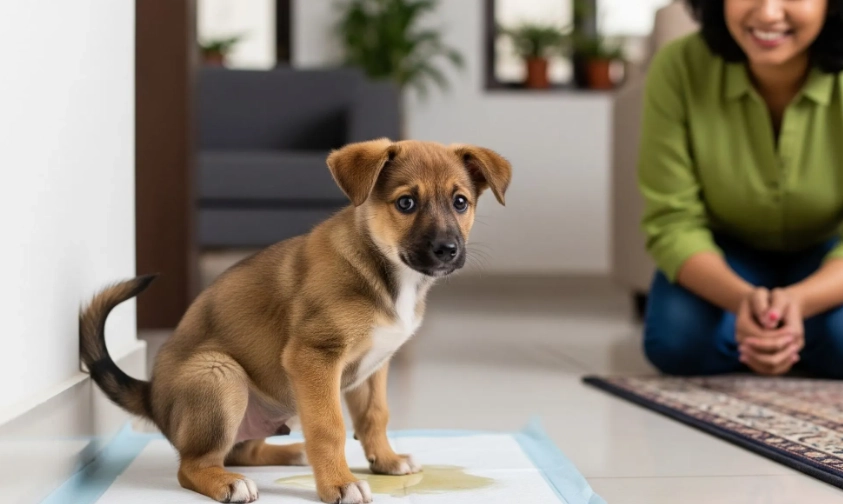
In my experience, expect reliable daytime training by 4-6 months, and nighttime control by 6-8 months. That said, small breeds mature slower. My Chihuahua mix took until nine months to sleep through the night without a potty break. Be patient.
| Age | Bladder capacity (hours) | Realistic training stage |
|---|---|---|
| 8–10 weeks | 1–2 | Need a potty break every hour during the day |
| 12–14 weeks | 2–3 | Can start spacing out trips a bit |
| 16–20 weeks | 3–4 | Daytime accidents drop sharply if you keep the schedule |
| 6+ months | 4–6 | Most puppies can hold it overnight |
The Daily Schedule That Made the Biggest Difference
You don't need a stopwatch, but you do need to take the puppy out at predictable times. I break it down like this: right after waking up, after every meal (within 15 minutes), after every nap, after every play session, and right before bed. That's five to seven trips outside a day for a young puppy.
What to do on each potty trip
Go to the same spot every time. The smell helps trigger the urge. Stand still, don't play, don't talk much. Give it five minutes. If nothing happens, go back inside and watch the puppy like a hawk for the next 10 minutes, then try again. I keep a 10-foot leash so the puppy has a little space but can't wander off and forget why we're out there.
When Accidents Happen (and They Will)
Don't scold. I get it — it's frustrating to step in a puddle at 6 a.m. But a puppy's brain doesn't link your yelling to the pee from two minutes ago. They just learn that you're scary when they go potty. That leads to hiding it behind the couch, which is a much worse problem.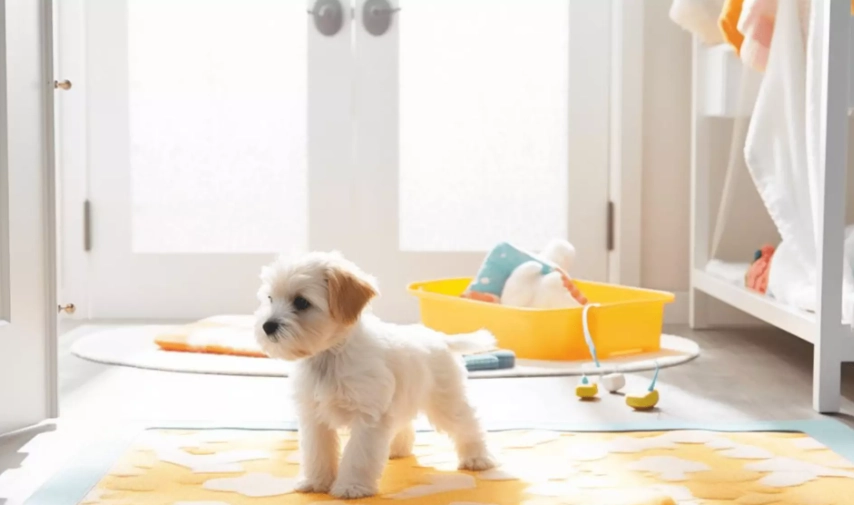
What to do: clean it up with an enzymatic cleaner. Regular soap leaves the scent behind, and the puppy will return to the same spot. I use a spray labeled with "enzymatic" on the bottle — any pet store brand works.
Then watch more closely. An accident is data. It tells you the schedule has a gap. Maybe the puppy drank a lot of water after play and needed to go out sooner. Adjust and move on.
Nighttime Potty Training Without Waking Up Every Hour
Here's the one tip that saved my sanity: set an alarm for 2 a.m. for the first week. Take the puppy out on a leash in the dark, no talking, no playing. Put them back in the crate. Most puppies can stretch to 3 a.m. by the second week, then 4 a.m., until they sleep through. The key is not letting them learn that whining at night gets them a play session.
I made that mistake with my first puppy. He whined at 1 a.m., I came running, talked to him, let him sniff around. He learned that whining got him attention. That mistake cost me two months of broken sleep.
Mistakes I See Even Experienced Owners Make
A few things come up over and over:
Using potty pads indoors too long. They're fine for a tiny apartment during a rainstorm, but puppies don't generalize well. If you teach them that peeing on a pad inside is okay, teaching them that outside is the only place takes twice as long. I skip pads unless a vet says otherwise.
Free-feeding. Leaving food out all day makes the potty schedule a guessing game. Feed meals at set times. You'll get predictable output.
Punishing after the fact. This one tears me up. A puppy who gets yelled at for an accident they had an hour ago is not learning. The owner feels better for a moment; the puppy just gets confused.
Common Questions from Real Owners
My puppy pees a little every time we go outside but never empties the bladder. What's going on?
This often happens when the puppy is distracted or has learned to "squeeze out" just enough to get back to play. Solution: take the puppy to the same boring spot on a leash and wait. No walk, no sniffing, no talking. Sometimes the potty break needs to be separate from a fun walk. I do potty first, then play. It works.
Should I use a crate for potty training at night even if my puppy cries?
Yes, but the crate should be just big enough for the puppy to stand and turn around — not so big they can pee in one corner and sleep in another. If the puppy cries, take them out, but keep it boring. The crying usually fades in three to five nights. What I don't do: let the puppy out to sleep on my bed to stop the crying. That creates a habit that's harder to break later.
How do I potty train a puppy in an apartment without a yard?
Same schedule, but you have to be more deliberate with your trips outside. I've had clients use a small patch of grass on a balcony for quick trips. It's not ideal, but it works if you then transition to the real outdoors later. The key is consistency in location and timing, not necessarily a backyard.
What if my puppy has an accident right after I bring them inside from a potty break?
This usually means the puppy didn't actually go outside — they got distracted. The fix is to keep the puppy on a leash during the break, wait until they finish, praise, and then come in. It saves everyone frustration.
This guide was fact-checked against current veterinary behavior guidelines from the American Veterinary Medical Association.

Comments