Guide Overview
Let's be honest. When you think of Euphorbias, you probably picture sun-baked Mediterranean gardens, gravel, and drought. The idea of a cold and wet hardy euphorbia sounds almost like a contradiction, doesn't it? I thought so too, until a particularly miserable winter in my own garden proved me wrong. I watched a few brave plants not just survive but actually look good while everything else turned to mush. That's what started this obsession.
If you're gardening in a place where the sky delivers more rain than sun and winters come with a damp, bone-chilling cold, you know the struggle. You want structure, you want year-round interest, you want something that doesn't look pathetic from October to April. But most of the architectural, drought-loving plants just rot away. That's where this specific group of plants comes in. We're not talking about all euphorbias here. We're talking about the select few that laugh in the face of soggy soil and frosty mornings.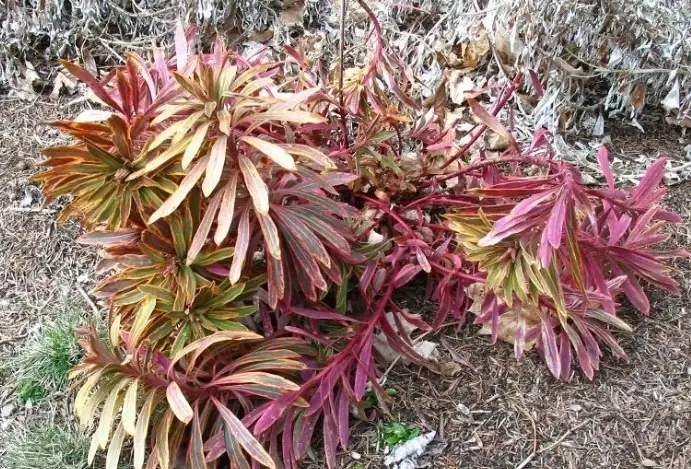
Finding reliable information on truly cold and wet hardy euphorbias is a nightmare. You'll see a plant labeled "hardy," but that often just means it can take dry cold. Wet cold is a whole different beast. It's the combination that kills. This guide is the result of digging through nursery lists, talking to growers in similar climates, and a fair bit of trial and (sad) error in my own beds. I'm here to save you that grief.
What Makes a Euphorbia "Cold and Wet Hardy" Anyway?
It's not one single thing. It's a combination of traits that let these plants cope with conditions that would spell doom for their cousins.
First, let's talk about the cold part. The USDA Hardiness Zone system (you can check your zone on the official USDA website) gives a temperature range. A plant hardy to zone 5 can handle temps down to -20°F to -10°F. But that rating usually assumes the ground is frozen and the plant is dormant. Now add the wet.
Wet soil in winter is problematic because cold water sucks heat from plant roots much faster than cold air. It also creates an anaerobic environment where roots suffocate and rot fungi thrive. So, a truly cold and wet hardy euphorbia needs strategies to deal with this double whammy.
I learned this the hard way with Euphorbia characias. Gorgeous plant, handles my dry summers like a champ. One winter with constant rain and temps hovering around freezing? Complete collapse. The crown just rotted into a smelly, slimy mess. It was a clear sign that "Mediterranean hardy" and "Atlantic rainy hardy" are not the same thing.
Some of these plants have evolved in mountain regions where snowmelt creates periodic wet conditions. Others form tight, woody crowns that sit above the soil line. Many go completely, decisively dormant, retreating underground to avoid the worst of it. They're not just sitting there tolerating the wet; they have an active game plan for it.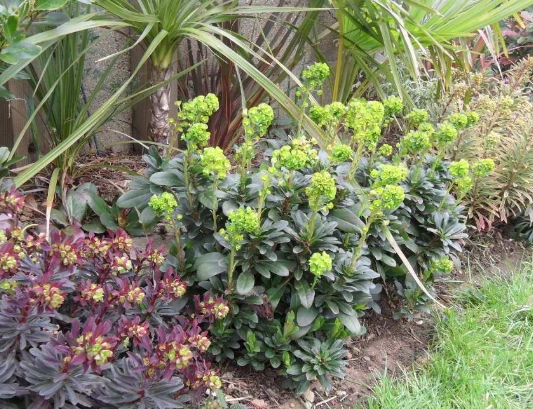
The Champions: Top Cold and Wet Hardy Euphorbia Varieties
Alright, let's get to the good stuff. These are the plants that have earned their stripes. I've ranked them not just on hardiness, but on their overall performance and reliability in damp, cold climates. Consider this your curated shortlist.
| Variety | Key Features & Look | Hardiness (USDA Zone) | Damp Soil Tolerance | Notes & Personal Take |
|---|---|---|---|---|
| Euphorbia amygdaloides var. robbiae (Mrs. Robb's Bonnet) | Dark green, glossy evergreen foliage. Lime-green flower bracts in spring. Spreads via runners. | 6-9 | Excellent | The ultimate shady, damp groundcover. Almost indestructible. Can be aggressive, but perfect for tough spots. My go-to for under trees. |
| Euphorbia palustris (Marsh Spurge) | Tall, bushy habit. Bright green foliage turns stunning orange-red in autumn. Large yellow flower heads. | 5-9 | Outstanding (even tolerates seasonal flooding) | The name says it all. Loves moisture. The fall color is unbelievable—a real bonus. Needs more space but worth it. |
| Euphorbia griffithii 'Fireglow' | Upright stems with orange-red flushed foliage. Fiery orange bracts in early summer. | 5-9 | Very Good | Adds amazing hot color. Spreads steadily but is manageable. Dies back cleanly in winter. One of the best for impact. |
| Euphorbia dulcis 'Chameleon' | Low, mound-forming. Foliage is a shifting mix of burgundy, purple, and green. Subtle green flowers. | 5-9 | Good | All about the foliage color. Self-seeds politely. Can get a bit floppy in rich, wet soil, but I just cut it back. |
| Euphorbia cyparissias (Cypress Spurge) | Feathery, fine blue-green foliage. Turns pinkish in cool weather. Small yellow-green flowers. | 4-8 | Good | Very drought tolerant once established, but handles winter wet superbly. Warning: This one is seriously invasive via runners in some regions. Check local advisories. I won't plant it anymore because it's too much work to control. |
| Euphorbia polychroma (Cushion Spurge) | Neat, dome-shaped mound. Brilliant acid-yellow bracts in spring. Green foliage. | 4-8 | Moderate to Good | A classic. Needs decent drainage but handles cold winters like a champ. The perfect early season pop. Just ensure it's not in a waterlogged spot. |
See a pattern? Many of the top cold and wet hardy euphorbias are herbaceous perennials. They die back to the ground, which eliminates the problem of soggy, rotting stems. Their energy is safe underground in the roots. This is a key survival strategy.
If you only remember one name from that list, make it Euphorbia palustris. For consistently wet, cold gardens, it's in a league of its own.
How to Actually Grow Them: A No-Nonsense Care Plan
You can't just plop these plants anywhere and expect miracles. Even the toughest need the right start. Here's the step-by-step that works.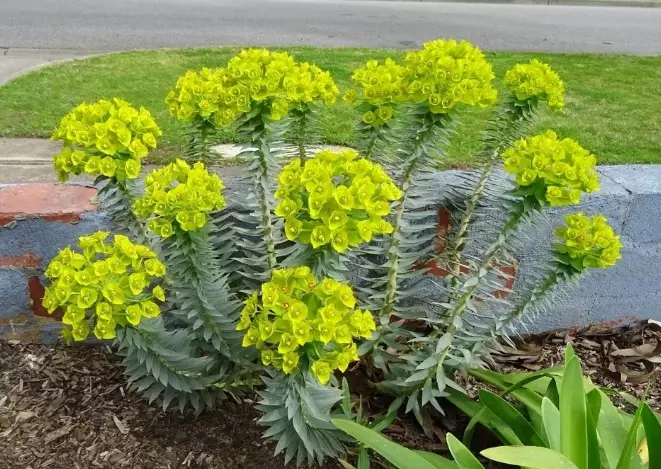
Planting: The Most Important Step
Getting this right solves half your future problems. The goal is to encourage water to drain away from the crown, even in a heavy clay soil.
- Timing is Everything: Plant in spring or early summer. This gives the plant a full season to establish a robust root system before it faces its first tough winter. Fall planting in wet climates is a huge risk.
- Site Selection: Full sun to partial shade. More sun generally means drier soil and happier plants. Morning sun is ideal as it dries dew from the foliage.
- The Planting Hole Ritual:
- Dig a hole twice as wide as the rootball, but only as deep.
- If your soil is heavy clay (like mine), mix a generous amount of coarse grit or horticultural sand (like 30-40% of the volume) with the native soil you dug out. Don't create a rich "bathtub"—just improve the structure. Compost is good, but grit is better for drainage.
- Place the plant so the crown (where stems meet roots) is slightly above the surrounding soil level. This is critical. Mound the soil up a bit if you have to.
- Backfill, firm gently, and water well.
Pro Tip: For extra insurance on heavy sites, plant on a slight mound or in a raised bed. Even 2-3 inches of elevation can make a world of difference for water runoff during winter storms.
Year-Round Care: Less is More
These are low-maintenance plants if you set them up correctly.
Watering: Water regularly during the first growing season. Once established, most of these cold and wet hardy euphorbias are surprisingly drought-tolerant. In fact, overwatering in summer is a more common mistake than underwatering. Let the soil dry out a bit between waterings.
Feeding: Don't. Seriously. Rich soil leads to weak, floppy growth that is more susceptible to rot and winter damage. A thin mulch of gravel or grit is more beneficial than any fertilizer. It keeps the crown dry and looks great.
The Milky Sap Warning: Always wear gloves when cutting or handling broken stems. The white latex sap can be a serious skin irritant and is toxic if ingested. Keep it away from your eyes—it's not a joke. I got a tiny splash on my eyelid once and it was intensely painful for hours.
The Winter Protocol
This is where you sit back, mostly. For herbaceous types (like E. griffithii or E. polychroma), the stems will die back after frost. You can leave them for winter interest—the skeletons can look architectural—and then cut them down to the ground in late winter before new growth starts. Cleaning them up helps prevent slug hideouts.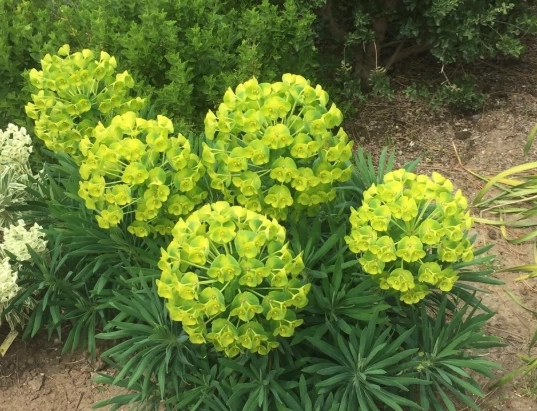
For evergreen types (like E. robbiae), just remove any obviously dead or damaged leaves in spring. Avoid cutting into green stems in autumn, as the wounds can let in moisture and rot.
The single biggest help you can provide in winter is ensuring good air circulation. Don't let fallen leaves pile up and smother the crown. A quick rake around the base in late autumn does wonders.
Solving Common Problems (Before They Start)
Even with the right plants, things can go sideways. Here’s what to watch for.
Crown Rot: The big one. Symptoms include sudden wilting, blackening at the base of stems, and a foul smell. Prevention is the only cure. Ensure that elevated planting and sharp drainage. If it happens, dig up the plant, cut away all rotten tissue, and replant in a drier spot if any healthy bits remain. Often, it's a total loss.
Powdery Mildew: Can appear on foliage in humid, still weather. Improve air circulation. If needed, a spray of diluted milk (1 part milk to 9 parts water) can help as a fungicide. I find it's rarely severe enough to harm the plant, just ugly.
Flop: Stems falling over, usually due to too much shade, too-rich soil, or not enough sun. The solution is usually to provide more light. You can also try the "Chelsea Chop": cut back the stems by about a third in late spring (around late May in the UK) to encourage sturdier, bushier growth.
Design Ideas: Making Them Work in Your Garden
These aren't just survivor plants; they're fantastic design elements.
Use the tall, structural forms like Euphorbia palustris as mid-border anchors. Their fresh spring green and fiery autumn color work with almost everything. Pair them with bold-leaved plants like Rodgersia or Ligularia that also enjoy moist soil.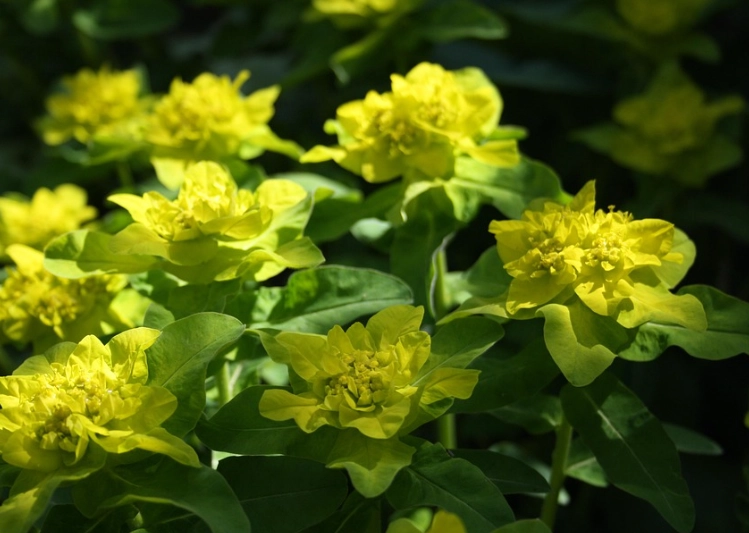
The low, carpeting types like Euphorbia robbiae are problem-solvers. Dry shade under trees? It's one of the few things that will thrive. It looks fantastic with spring bulbs poking through it.
For color contrasts, the burgundy tones of Euphorbia dulcis 'Chameleon' are stunning next to silver foliage plants like Stachys byzantina (lamb's ears) or the bright gold of Hakonechloa grass.
My favorite combo right now is Euphorbia griffithii 'Fireglow' pushing up through a sea of blue forget-me-nots. The orange and blue clash in the best possible way, and the euphorbia's strong stems hold everything up. It looks planned, even though the forget-me-nots just self-seeded there.
Remember, all these cold and wet hardy euphorbias provide that essential, long-lasting bract color in spring and early summer when the garden is waking up. They're workhorses.
Your Questions, Answered
The Bottom Line
Gardening in a cold, wet climate doesn't mean you're stuck with heather and grass. The right cold and wet hardy euphorbias bring structure, vibrant color, and a tough-as-nails attitude to your borders. They fill that crucial early season gap and many provide multi-season interest.
The secret isn't a green thumb—it's just choosing the right soldiers for the battle. Focus on the herbaceous, clump-forming types from the table, plant them high and in gritty soil, and then mostly leave them alone. They'll reward you by thriving where other plants simply give up.
Start with one. Maybe the fiery Euphorbia griffithii 'Fireglow' or the unkillable Euphorbia robbiae. See how it performs in your microclimate. Gardening is always an experiment, but with these plants, the odds are finally stacked in your favor. You might just find, as I did, that these resilient spurges become the backbone of your garden, proving that beauty and toughness really can go hand in hand, even in the damp and the cold.