Explore the Guide
Let's talk about ninebarks. You've probably seen them around – maybe in a neighbor's yard or at the garden center – and wondered what all the fuss is about. I know I did. A few years back, I was looking for something tough, beautiful, and low-maintenance to fill a tricky spot in my own garden. That's when I really fell down the rabbit hole of ninebark shrub varieties.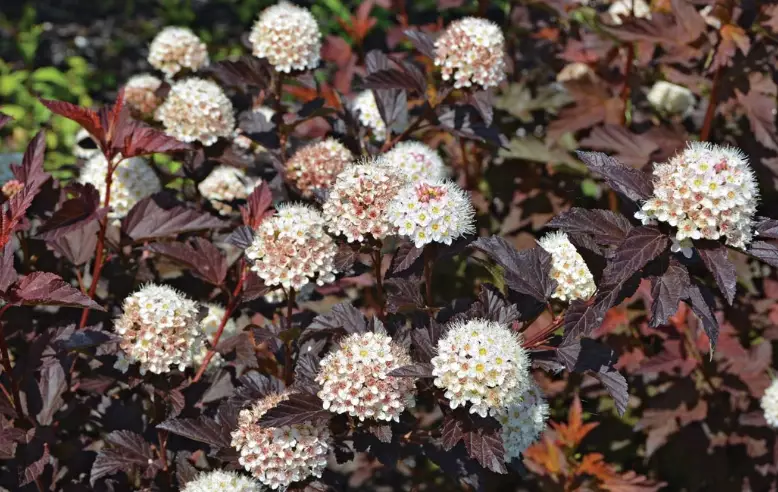
It's not just one plant. Far from it. The range of colors, sizes, and habits within the ninebark family is honestly surprising. From deep burgundy foliage that looks good enough to eat to bright chartreuse leaves that light up a shady corner, there's a type for almost every situation. And the best part? They're incredibly resilient. We're talking about shrubs that laugh in the face of drought, poor soil, and even pesky deer. If you're looking for a workhorse plant with star power, you're in the right place.
This guide is the result of my own trial and error, plus a lot of conversations with other gardeners and nursery folks. We're going to move beyond just the famous 'Diablo' and explore the whole wonderful world of ninebark shrub varieties. By the end, you'll know exactly which one might be the perfect fit for your space.
A Deep Dive into Popular Ninebark Varieties
This is where it gets fun. Breeders have been busy, and the selection of ninebark shrub varieties has exploded. It can be overwhelming, so I like to break them down by their standout feature. Are you in it for the dramatic foliage color, the compact size, or something truly unique?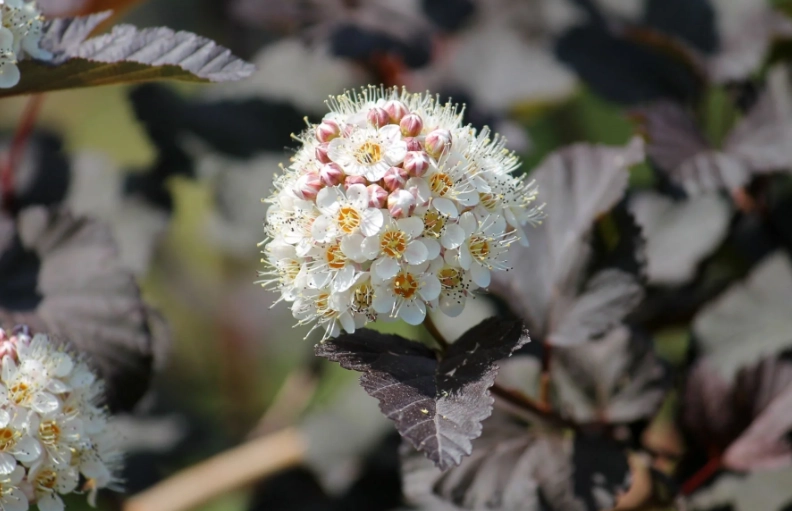
The Classics: Tried-and-True Favorites
These are the varieties you're most likely to find, and for good reason. They've proven themselves in gardens across the country.
Physocarpus opulifolius 'Diablo' (or 'Monlo') is the poster child. Its deep purple, almost blackish-red leaves are stunning against a green backdrop. In early summer, it's covered in delicate pinkish-white flowers, followed by red seed pods. It's vigorous, often reaching 8-10 feet tall and wide. A word of caution, though – in deep shade, the foliage can fade to a dull greenish-purple. It needs a good dose of sun to keep that intense color.
Physocarpus opulifolius 'Summer Wine' is like 'Diablo's more refined cousin. It has similarly fine-textured, wine-red foliage but on a more manageable, gracefully arching plant, usually topping out around 5-6 feet. I find it a bit more versatile for smaller spaces. The contrast between the dark leaves and the frothy pink flowers is just beautiful.
Then there's Physocarpus opulifolius 'Dart's Gold', which goes in the completely opposite direction. Its bright golden-yellow leaves in spring mature to a lovely chartreuse green. It's a fantastic way to brighten up a spot. It tends to be more compact as well, around 5 feet tall. Keep in mind, in hot afternoon sun, the leaves can sometimes scorch. A bit of afternoon shade in warmer climates is a good idea.
Newer Stars and Compact Picks
If you have a smaller garden, patio, or want to use ninebark in a foundation planting, these compact ninebark shrub varieties are game-changers.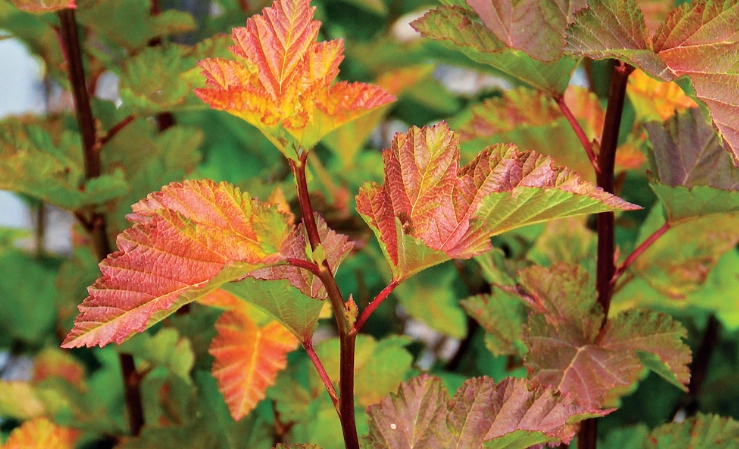
The 'Little Devil' ninebark is a true dwarf. We're talking 3-4 feet tall and wide, max. It packs all the punch of 'Diablo' with its dark foliage but in a perfectly scaled package. It's ideal for containers or the front of a border.
'Tiny Wine' is another superb compact variety. Even smaller than 'Little Devil', it stays around 3-4 feet tall but is a bit wider. It has rich purple foliage and a dense, bushy habit. This one is perfect for mass planting as a low hedge or accent.
For something different in the compact category, seek out 'Amber Jubilee'. This one is a color-shifter. New growth emerges in vibrant oranges and yellows, matures to a rich green with a purple overlay, and then turns coppery in fall. It's a kaleidoscope on a 5-foot shrub.
Honestly, the number of compact ninebark shrub varieties now available means no one has to miss out, even with limited space.
Beyond the Ordinary: Unique Foliage and Form
Want to really make a statement? These varieties offer something a little extra.
'Center Glow' has foliage that seems to be lit from within. The center of each leaf is a golden yellow, blending out to a rich red on the edges. The effect is stunning, especially when backlit by the sun. It grows to about 6-8 feet.
'Ginger Wine' is a newer introduction that lives up to its name. The new leaves emerge in a fiery blend of orange and copper, settling into a deep burgundy for summer. The exfoliating cinnamon-colored bark is also more prominent on this variety.
For a textural twist, look for varieties with particularly deeply cut or lobed leaves, which give an even finer, more elegant appearance. 'Summer Wine' already has this trait, but it's worth asking about at your nursery.
| Variety Name | Foliage Color | Mature Size (H x W) | Best For | My Quick Take |
|---|---|---|---|---|
| 'Diablo' / 'Monlo' | Deep purple-red | 8-10' x 8-10' | Dramatic backdrop, large screens | The classic. Powerful but can get big. |
| 'Summer Wine' | Wine-red | 5-6' x 5-6' | Elegant focal point, mid-border | Graceful and reliable. My personal favorite. |
| 'Dart's Gold' | Bright gold/chartreuse | 5' x 5' | Brightening shade, contrast | Cheerful but watch for hot sun scorch. |
| 'Little Devil' | Dark red-purple | 3-4' x 3-4' | Small gardens, containers, low hedges | Packs a big punch in a small space. |
| 'Tiny Wine' | Rich purple | 3-4' x 4-5' | Ultra-compact borders, mass planting | Incredibly dense and neat. Perfect for tidy looks. |
| 'Amber Jubilee' | Orange, gold, purple blend | 5' x 5' | Season-long color interest | A real show-off. Never boring. |
| 'Center Glow' | Yellow-center, red-edge | 6-8' x 6-8' | Specimen planting, focal point | Truly unique coloring. Needs good light. |
How to Pick Your Perfect Ninebark: A Decision Guide
With so many great ninebark shrub varieties, how do you choose? Don't just grab the first one you see. Ask yourself a few questions about your garden first.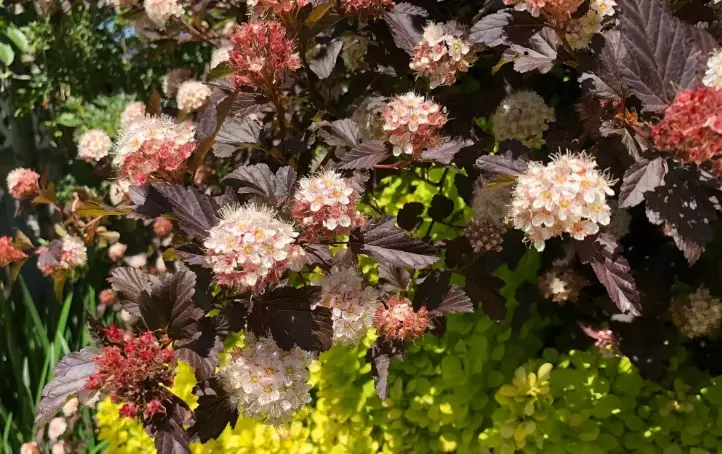
First, look at your space. How much room do you actually have? Measure it. There's a huge difference between a 'Little Devil' and a 'Diablo'. Planting a variety that wants to be 10 feet wide in a 4-foot gap is just asking for a lifetime of aggressive pruning, which ruins its natural shape. For smaller spaces or containers, stick with the compact ninebark shrub varieties like 'Tiny Wine' or 'Little Devil'.
Next, consider the light. Most ninebarks, especially the dark-leaved and bi-colored types, need at least 6 hours of direct sun to develop their best color. They'll survive in partial shade (4-6 hours), but the foliage will often be greener, less vibrant, and the plant may get leggy. The golden varieties like 'Dart's Gold' actually appreciate a bit of afternoon shade in hot climates to prevent leaf scorch.
What's your goal? Are you looking for a privacy screen, a foundation plant, a colorful hedge, or a solo specimen? Taller varieties are great for screens. Compact ones make excellent low hedges or border anchors. A unique variety like 'Center Glow' deserves to be a standalone star.
Think about color combos. This is the fun part. Dark purple ninebarks ('Diablo', 'Summer Wine') look incredible paired with plants that have silver, gold, or bright green foliage. Try them with Russian sage, ornamental grasses, or gold-toned spirea. The golden varieties ('Dart's Gold', 'Amber Jubilee') pop against dark greens or purple foliage. They also light up shady corners beautifully.
Planting and Caring for Your Ninebark Shrubs
Okay, you've picked your variety. Now let's get it in the ground and set it up for success. The great thing about these shrubs is that they're not divas.
Getting Started: Planting Basics
You can plant container-grown ninebarks almost any time the ground isn't frozen, but spring or early fall is ideal. Dig a hole that's as deep as the root ball but two to three times as wide. This loosens the soil for the roots to expand easily. Don't bury it deeper than it was in the pot. Backfill with the native soil – no need for fancy amendments. In fact, amending just the planting hole can create a "bathtub effect" where water doesn't drain properly. If your soil is terrible, it's better to improve the entire bed area.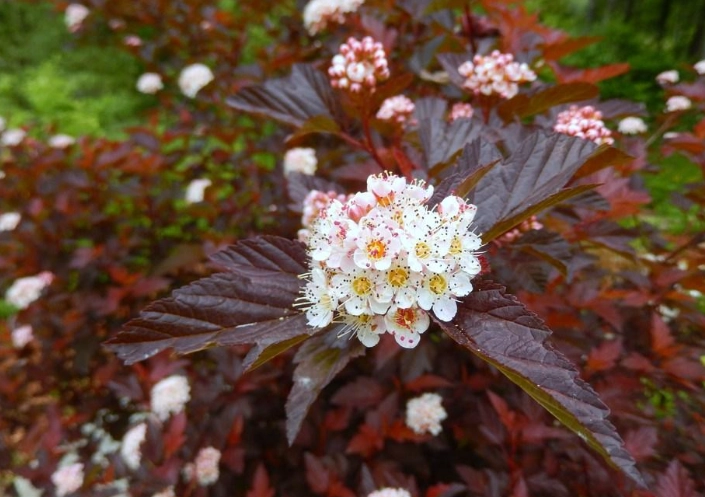
Water it deeply after planting. Then, apply a 2-3 inch layer of mulch (like shredded bark) around the base, keeping it a few inches away from the stems. This keeps roots cool, suppresses weeds, and retains moisture.
The Simple Care Routine
Watering: For the first growing season, water regularly to help establish a deep root system. Once established, ninebarks are remarkably drought-tolerant. I only water mine during extended dry spells of a month or more. Overwatering is a bigger risk than underwatering.
Feeding: They're not heavy feeders. An application of a balanced, slow-release fertilizer or a layer of compost around the base in early spring is plenty. More fertilizer often just leads to weak, leggy growth.
The Big One: Pruning. This is where people get nervous, but it's simple. Ninebarks bloom on "old wood" – wood that grew the previous season. The best time to prune is right after they finish flowering, usually in late spring or early summer. This gives them time to grow new stems that will flower next year.
You have a few options:
- Renewal Pruning: This is my preferred method for keeping the plant healthy and vigorous. Each year, right after blooming, cut about one-third of the oldest, thickest stems all the way down to the ground. This encourages fresh, new growth from the base and maintains a good shape.
- Rejuvenation Pruning: If an older plant has become overgrown or woody, you can be drastic. In late winter, you can cut the entire shrub down to about 6-12 inches from the ground. It will shockingly grow back with a vengeance that same season, though you'll sacrifice that year's flowers.
- Light Shaping: You can lightly trim for shape after flowering, but avoid shearing it into a tight ball or box. You'll cut off all the flower buds for next year and ruin its natural, graceful form.
For detailed, science-backed pruning guidance, the Royal Horticultural Society's pruning guide offers excellent general principles that apply perfectly to ninebarks.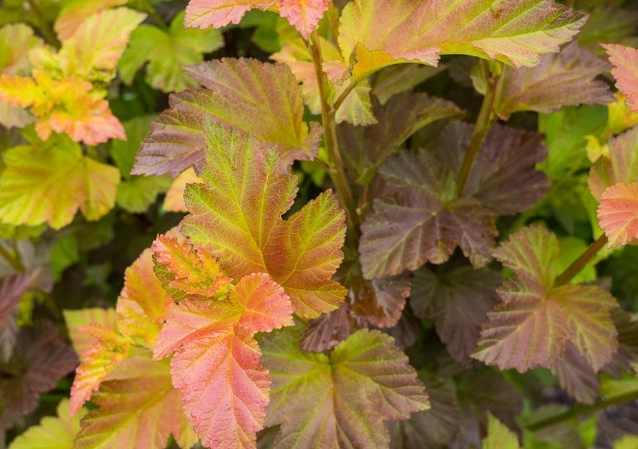
Your Ninebark Questions, Answered
Wrapping It Up: Why Ninebark Deserves a Spot in Your Garden
Looking back, it's easy to see why I, and so many other gardeners, have become fans of these plants. The range of ninebark shrub varieties available today means there is literally an option for almost any need: big or small, sun or part shade, dramatic or subtle.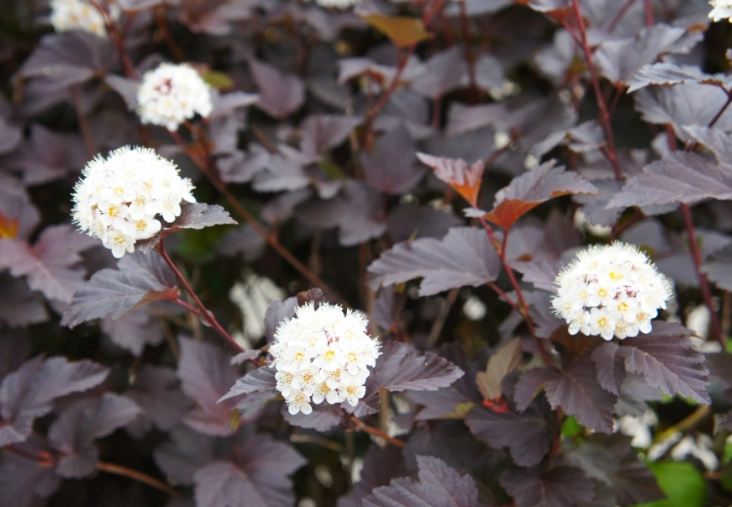
They give you multiple seasons of interest—colorful foliage in spring and summer, pretty flowers, interesting seed heads, and that exfoliating bark in winter. They ask for so little in return: a decent spot with some sun and not being drowned. They support local wildlife. And they look good doing it.
My advice? Start with one. Maybe it's a 'Summer Wine' for structure, or a 'Tiny Wine' for a pot by the front door. See how it performs in your microclimate. I bet you'll be impressed by its toughness and charm. Before long, you might find yourself, like I did, making room for just one more of these fantastic ninebark shrub varieties.
The journey through the different types of ninebark shrubs is part of the fun of gardening. It’s about finding that perfect plant personality that clicks with your space and your style. With their low-fuss attitude and high-impact looks, these shrubs are more than just a trend—they're a smart, lasting choice for a beautiful and resilient garden.