Let's be honest. You probably bought a Heuchera, or Coral Bells as most folks call them, because you saw one at the garden center and its leaves just stopped you in your tracks. Maybe it was a deep, almost black purple like 'Obsidian'. Or a lime green so bright it glows, like 'Lime Marmalade'. Or maybe one of those crazy ones with silver overlay and dark veins. They're stunning. Then you get it home, plant it, and a year later it's looking... meh. A bit straggly, maybe some dead leaves in the center, not quite the showstopper it was. What happened?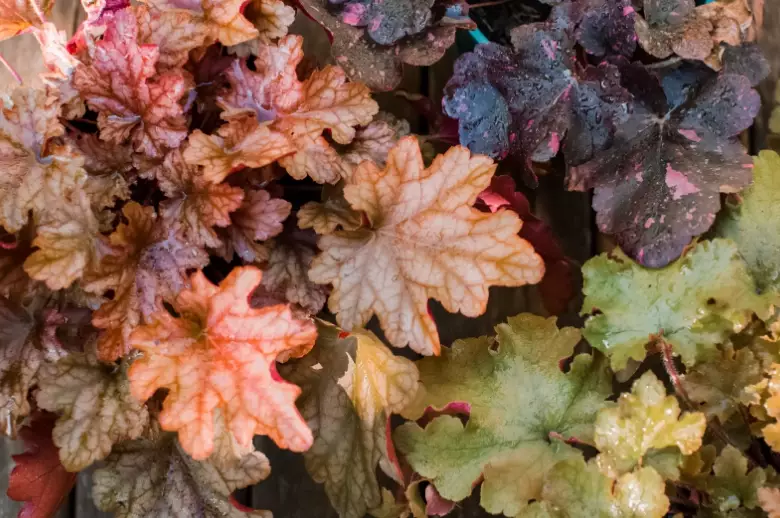
That was me, about ten years ago. I killed a beautiful 'Peach Flambe' by treating it like any other perennial. Big mistake. Since then, I've grown dozens of varieties, made plenty more mistakes (some expensive ones!), and figured out what actually makes them thrive. This guide isn't a copy-paste from a textbook. It's the down-and-dirty, practical heuchera coral bells care routine that comes from getting your hands dirty. We'll skip the generic advice and get into the specifics that really matter.
The secret? It's not one thing. It's a combination of getting the foundation right (soil is everything), understanding their weird little habits, and performing a few simple maintenance tasks at the right time. Do that, and you'll have plants that look great from spring to frost, year after year.
Quick Guide to Sections
Getting Started: The Non-Negotiables for Planting
Think of planting like building a house. A bad foundation means problems forever. Get this part of your heuchera care right, and you prevent a world of issues down the line.
Where to Put Them: Light is Everything (And It's Not What You Think)
Here's the first myth to bust: "Coral Bells are shade plants." That's only half true. In hot, dry, southern climates (think USDA zones 7-9), they absolutely need afternoon shade or dappled light to prevent scorching. Their leaves are thin and can fry. But in cooler northern zones (4-6), many Heucheras will actually produce their best, most intense leaf color and sturdiest growth with a solid half-day of morning sun. I've had 'Midnight Rose' look washed out in deep shade, but put it where it gets sun until noon, and the pink speckles pop like crazy.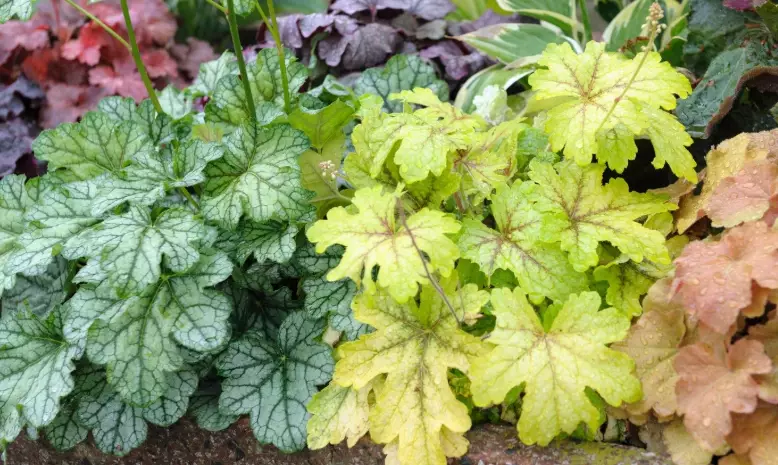
Wind is another sneaky factor. Their flower stalks can get tall and those big leaves act like sails. A super windy spot can batter them. Tuck them in near a shrub, a fence, or behind a sturdier perennial for a bit of protection.
Soil: This is Where Most People Go Wrong
If I had to give one golden rule for coral bells plant care, it's this: they hate wet feet. Hate it. Soggy, poorly drained soil, especially over winter, is the #1 killer. It leads to crown rot, and that's usually game over.
They love soil that's rich in organic matter but also extremely well-draining. Think of the forest floor—spongy with decaying leaves, but water drains through easily. How do you get that?
- Amend, amend, amend. If you have heavy clay, don't just dig a hole and plop it in. Dig a hole twice as wide as the pot, but only as deep. Mix a huge amount of compost, well-rotted leaf mold, or a soil conditioner like pine bark fines into the native soil. I'm talking a 50/50 mix. It creates a great root run.
- Raise it up. In really challenging soil, plant them in a raised bed or on a slight mound. Even 4-6 inches of elevation improves drainage dramatically.
- pH Matters (More Than You've Been Told). They prefer slightly acidic to neutral soil (pH 6.0-7.0). In very alkaline soils, they can become chlorotic (yellow leaves with green veins). If your plants look pale, a soil test is a good idea. A top dressing of composted oak leaves or an acidifying mulch like pine needles can help gently lower pH over time.
The Actual Planting Process
Don't plant them too deep. This is critical. The crown (where the stems meet the roots) should sit right at or slightly above the soil surface. Burying the crown invites rot. Gently tease out any roots that are circling the pot—this encourages them to grow outward into your nice, amended soil. Water them in deeply right after planting to settle the soil and eliminate air pockets.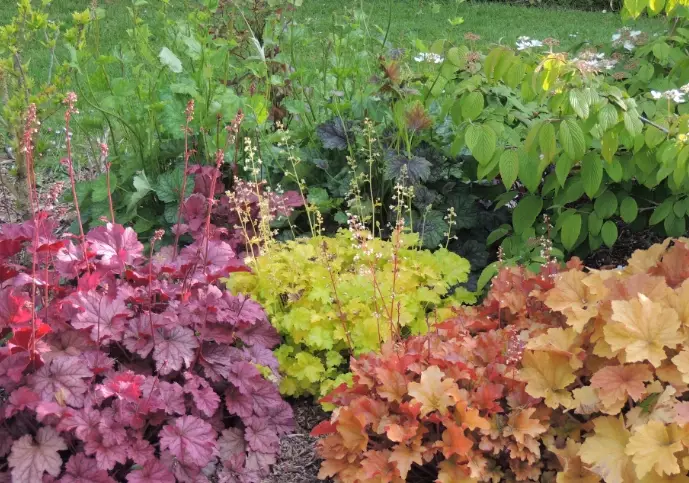
The Year-Round Heuchera Coral Bells Care Routine
Okay, they're in the ground and happy. Now what? The ongoing care is simple but specific.
Watering: Finding the Balance
Heucheras like consistent moisture, especially in their first year as they establish. But "consistent" doesn't mean "soaking wet." The goal is evenly moist soil. Stick your finger in the soil near the plant. If the top inch is dry, it's time to water. A deep, thorough soaking less often is far better than frequent sprinkles that only wet the surface.
Drip irrigation or a soaker hose is fantastic for them. It delivers water right to the roots without wetting the foliage, which helps prevent disease. Overhead watering in the evening is a recipe for fungal issues. During intense summer heat, they might need water twice a week. In cooler spring and fall, once a week might be plenty.
To Feed or Not to Feed?
Heucheras aren't heavy feeders. If you planted them in rich, compost-amended soil, they might not need much extra. Over-fertilizing, especially with high-nitrogen fertilizers, can lead to lots of soft, weak growth that's susceptible to pests and less colorful leaves.
My personal routine, which has worked well, is this: In early spring, as new growth emerges, I give them a light top-dressing with a balanced, slow-release organic fertilizer (like a 5-5-5) or simply scratch in a handful of compost around the plant. That's it for the year. Sometimes, if they look a bit tired in mid-summer, I might give them a very dilute liquid seaweed feed, but that's rare. Less is more.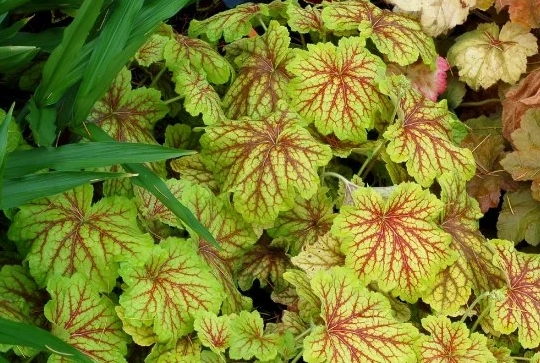
The Essential Grooming: It Makes All the Difference
This is the part of heuchera coral bells care that most guides gloss over, but it's what keeps them looking manicured and healthy.
- Spring Cleanup: In early spring, before new growth gets going, go through and carefully remove all the old, tattered winter leaves. Use your fingers or sharp snips. Be gentle to avoid damaging the tiny new leaves at the crown. This lets light and air into the center.
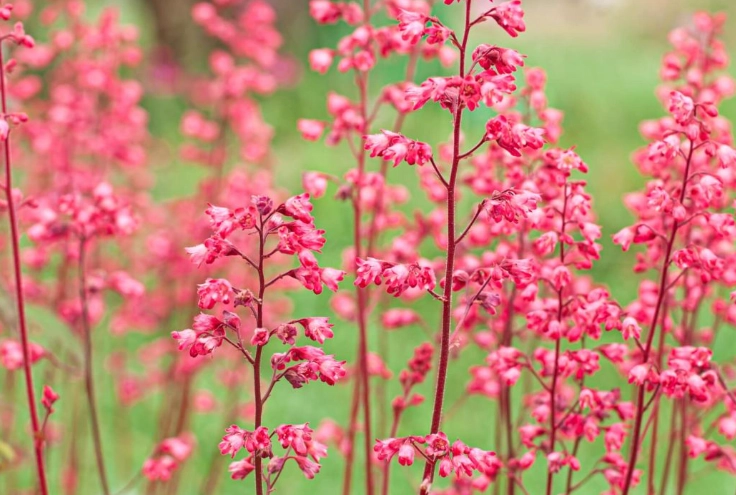
- Deadheading Flowers: The tiny bell-shaped flowers on tall airy wands are charming. But once they fade to brown, they look messy. I like to cut the spent flower stalks back to the base. It encourages the plant to put energy back into the foliage. Some varieties, like 'Berry Smoothie', have especially showy flowers—you might want to leave them for a bit longer.
- Summer Tidy-Up: Throughout the season, occasionally remove any leaves that get damaged by slugs, sun scorch, or just look old and ragged. It takes two minutes and keeps the plant looking fresh.
Should you cut them back in fall? I don't. The old leaves provide a bit of winter protection for the crown. I do the big cleanup in spring instead.
Advanced Care: Division, Pests, and Problems
When and How to Divide Heuchera
After 3-4 years, you might notice your Heuchera getting a bit woody and open in the center, with all the growth around the edges. That's its way of saying it's time to divide. It's also the cheapest way to get more plants! The best times are early spring or early fall.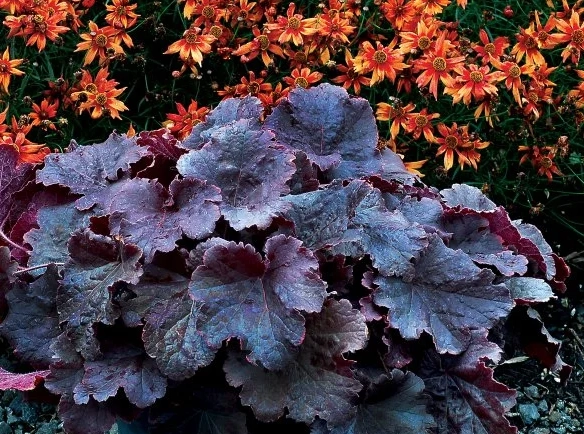
Dig up the entire clump. You'll see it's made up of several smaller rosettes. Wash or shake off some soil so you can see what you're doing. Using a sharp knife or even your hands (for loose clumps), pull or cut the plant apart into sections, each with its own roots and several leaves. Replant the healthiest-looking outer divisions. The old, woody center can often be composted. Water the new divisions well.
The Usual Suspects: Pests and Diseases
Heucheras are pretty tough, but a few things bug them.
| Problem | Symptoms | Solution & Prevention |
|---|---|---|
| Crown/Root Rot | Plant wilts, collapses; crown feels mushy and brown. Often in wet conditions. | Prevention is key: Ensure perfect drainage. Avoid overwatering. Remove affected plants to prevent spread. |
| Vine Weevil (Larvae) | Sudden wilting/ collapse. White, C-shaped grubs in soil eating roots. | Biological control with parasitic nematodes (apply to soil in late summer/fall) is very effective. Check potted plants carefully. |
| Leaf Scorch | Brown, crispy edges or patches on leaves, especially on lighter-colored varieties. | Provide afternoon shade. Ensure consistent soil moisture (drought stress worsens it). Mulch to keep roots cool. |
| Slugs & Snails | Irregular holes chewed in leaves, especially in spring. Silver slime trails. | Use iron phosphate-based baits (pet-safe). Handpick at night. Encourage predators like birds and beetles. |
Picking the Right Heuchera for Your Spot
Not all Coral Bells are created equal. Some are bred for sun tolerance, some for specific colors. Here's a quick rundown of some popular types and their personalities.
- 'Palace Purple' & 'Obsidian': The classic purples. 'Obsidian' holds its dark color better in heat/sun. Good for contrast.
- 'Lime Marmalade', 'Key Lime Pie': Vibrant chartreuse. They brighten up dark corners like nothing else. Can take a bit more sun than dark varieties.
- 'Caramel', 'Peach Flambe', 'Georgia Peach': The amber/peach/orange group. Stunning. Often prefer a bit more shade to prevent fading. 'Caramel' is a monster grower for me.
- 'Silver Scrolls', 'Marmalade': Have silvery overlay on leaves. Absolutely gorgeous and often more sun-tolerant. The silver reflects light.
- The "Villosa" types (like 'Brownies'): Often have more textured leaves and are touted as being extra heat/humidity tolerant. Worth trying in challenging southern climates.
For authoritative information on Heuchera species and their native habitats, the Missouri Botanical Garden's Plant Finder is an incredible resource. It's my go-to for checking plant details and hardiness.
Your Heuchera Coral Bells Care Questions, Answered
Why are the leaves on my Heuchera turning brown at the edges?
This is almost always leaf scorch. It's a combination of too much intense sun (especially afternoon sun) and/or inconsistent watering. The plant loses water from its leaves faster than the roots can take it up. Move it to a shadier location or provide a sun shield. Mulch heavily to keep the root zone cool and moist. Don't just assume it's a disease and start spraying.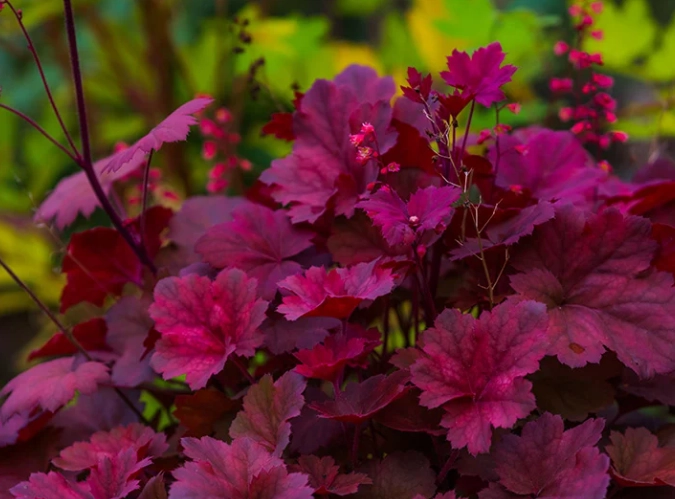
My plant looks leggy and the center is bare. What should I do?
First, it might need more light. Leggy growth is often a plea for more sun. Second, it's probably mature and needs dividing. That woody stem is normal for older plants. Dig it up in spring or fall, cut off the healthy rosettes from the sides (with roots attached), and replant those. Discard the old, woody center. This will rejuvenate it.
Should I cut back my Coral Bells for winter?
I don't recommend a hard fall cutback. The old leaves help protect the crown from winter freeze-thaw cycles and cold damage. I leave them until spring. In early spring, once you see tiny new leaves starting in the center, that's your cue to gently pull away all the old, dead foliage. It's a satisfying spring ritual.
Are Heucheras deer resistant?
Generally, yes! They are listed as deer-resistant by most sources, including cooperative extension services. Deer might take a nibble if they're desperate, but they're not a favorite. The hairy or textured leaves seem to be unappetizing. Rabbits tend to leave them alone too, in my experience. This makes them fantastic for woodland edge gardens where deer are a problem.
Can I grow Heuchera in containers?
Absolutely! They make fantastic container plants. The key is using a high-quality, well-draining potting mix (never garden soil). Make sure the pot has excellent drainage holes. Container plants dry out faster, so you'll need to water more frequently, especially in summer. They also benefit from a light feeding more often, as nutrients leach out with watering. Overwintering pots can be tricky; in cold climates, the roots are more exposed. Sinking the pot in the ground or moving it to an unheated garage can help.
For more detailed, science-backed advice on perennial care practices like division and overwintering, your local university's Cooperative Extension website is a treasure trove of free, reliable information.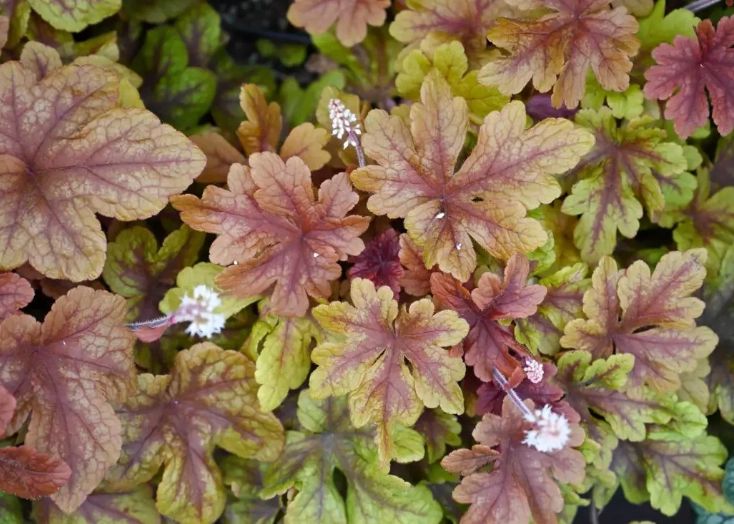
Wrapping It Up: The Simple Truth
Caring for Heuchera isn't complicated, but it is specific. Get the soil drainage right. Give them the right light for your climate (remember, morning sun is often a friend). Water them deeply when they're dry, but don't let them sit in soup. Give them a little snack in spring and a good grooming. That's really the core of successful heuchera coral bells care.
They're not "plant it and forget it" perennials, but the little bit of attention they ask for pays back tenfold in color and texture. They're the perfect foil for hostas, ferns, and astilbes in the shade, and they can hold their own as a foliage thriller in a sunny container. Don't be afraid to try a few. Once you understand their simple needs, you'll find they're one of the most rewarding and low-drama plants in the garden. And if you lose one? Well, we've all been there. It just means a trip back to the garden center for a new, exciting variety.
Happy gardening!