You know that feeling when you walk past a cottage garden in early summer and your eyes just lock onto those towering spires? That's the magic of delphiniums. For years, I thought they only came in one flavour: blue. A nice, predictable blue. Turns out, I was about as wrong as you can be. The world of delphinium colours is a surprisingly deep and varied rabbit hole, and it goes way beyond the classic azure.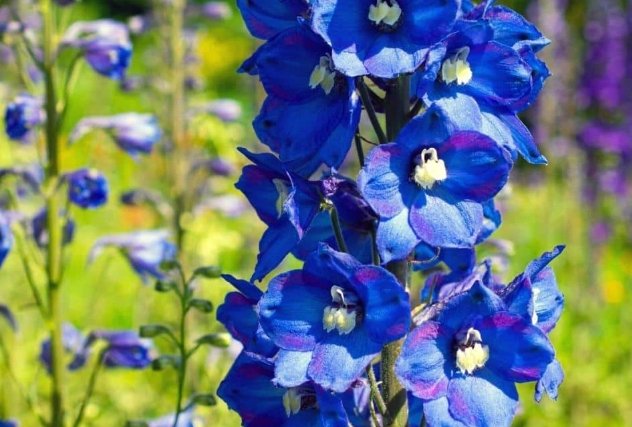
Let's be honest, most of us search for "colours of delphiniums" because we're planning something. Maybe we're trying to match a border, or we're sick of the same old palette, or we saw a stunning picture online and need to know if it's real. I've been there. I once spent a whole afternoon trying to find a specific lavender shade I swore I'd seen, only to learn it was a particular cultivar that's a bit finicky. That's the thing about these plants – their colour isn't just a label on a packet. It's a living thing influenced by sun, soil, and a bit of luck.
Why Do We Care So Much About Colour Anyway?
It's not just about aesthetics, though that's a huge part. Colour in the garden drives emotion and design. Cool blues and purples feel serene and recede, making spaces feel larger. Warm pinks and whites pop forward and feel cheerful. Getting the colours of delphiniums right means you're not just growing a plant; you're painting with it.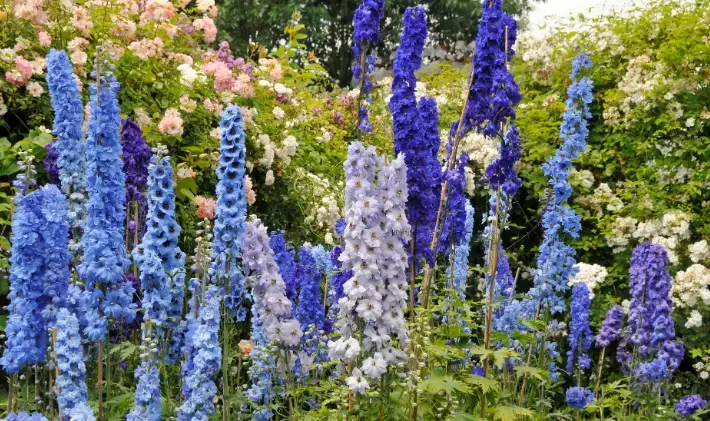
And there's a practical side. Some colours are linked to harderiness or growth habits. The classic, deep blues often come from the more robust Elatum group, while some of the paler, more delicate pinks might be from the Belladonna types which have a slightly different form. Knowing this can save you disappointment if you're gardening in a challenging climate.
The Main Colour Families of Delphiniums
Forget the basic colour wheel. Delphiniums have their own taxonomy. Broadly, you can break them down into a few core families, but within each, the variations are staggering.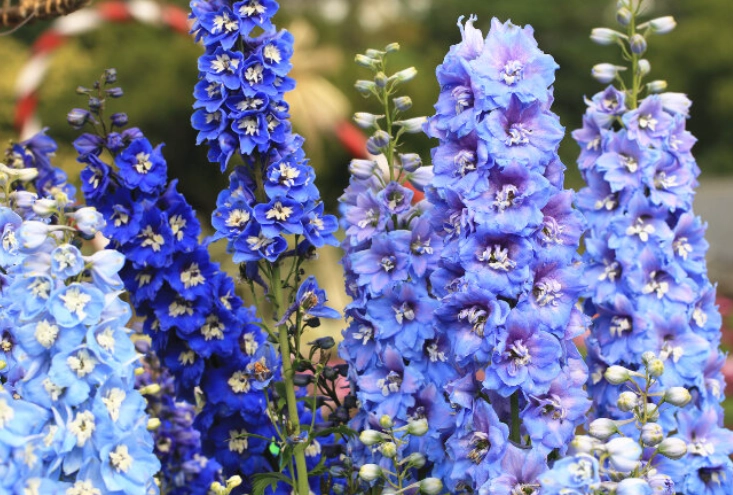
The Blues: From Sky to Midnight
This is the classic. The one everyone knows. But "blue" is a pathetic word for the spectrum on offer.
You've got your Sky Blues – think 'Blue Bird' or 'Summer Skies'. They're airy, light, and almost translucent in the morning sun. Then there are the True Royal Blues, like the famous 'Blue Nile'. This is the colour you imagine when you think of a perfect delphinium. Dense, saturated, and regal. Go deeper and you hit the Midnight and Indigo Blues of varieties like 'Black Knight' (which is really a very, very dark blue). These are dramatic and almost seem to absorb light.
I find the very dark blues can sometimes look a bit muddy from a distance, especially on overcast days. They need a bright backdrop, like a light fence or silvery foliage, to really sing.
The Purples and Violets: The Regal Shift
This is where things get interesting. Purple delphiniums often have a luminous quality, a kind of inner glow. They straddle the line between cool and warm.
Clear, Bright Purples like those in 'Purple Passion' are vibrant and eye-catching. Then you have the Lavender and Lilac Shades, which are softer, more romantic, and fantastic for blending with pastel schemes. 'Astolat' is a great example, with its soft lavender-pink flowers. Some purples have a greyish or smoky cast to them, which makes them incredibly sophisticated and modern-looking.
The Pinks, Mauves, and Reds
Yes, red! Well, sort of. True scarlet is elusive, but what you get is often more beautiful.
Soft Pinks and Mauves are common in the Belladonna group ('Pink Sensation' is a staple). They're less formal, more blowsy than the giant spires. Then there are the Deep Rose and Magenta tones. 'Red Caroline' is a famous one, though it's more a deep rose-pink than a fire-engine red. These colours add incredible warmth and are real focal points.
The Whites and Creams
Never underestimate a white delphinium. In a sea of colour, a spire of pure white is breathtaking. It acts as a visual palate cleanser.
You have Pure, Stark Whites like 'Galahad' – impeccable and classic. Then there are the Creams and Ivory shades, which are softer and warmer. 'Moonbeam' is a lovely example. These colours are fantastic for night gardens, where they seem to glow in the twilight, and they're perfect for wedding gardens too.
The Bicolours and Eyes
This is the real party trick of the delphinium. Many flowers have a contrasting central "bee" or "eye." This isn't just a cute detail; it's a major part of their visual punch.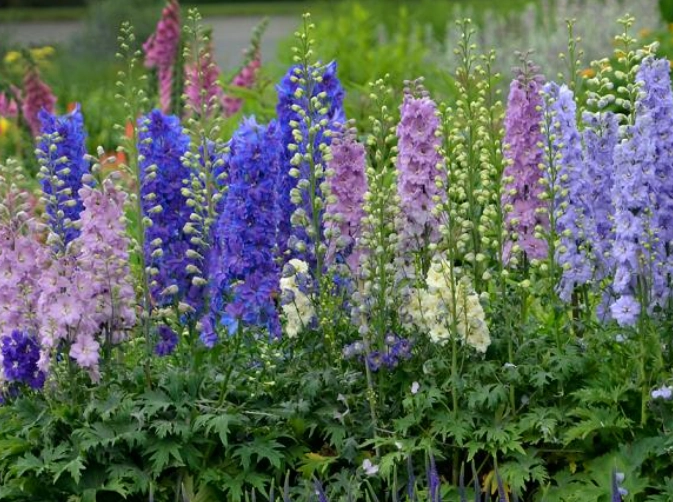
A sky blue flower with a white eye feels fresh and clean. A deep purple flower with a black eye becomes mysterious and intense. The eye can be white, cream, black, or even brown, and it dramatically changes the character of the bloom. When you're choosing colours of delphiniums, don't just look at the main colour – check the eye. It's the finishing touch.
A Quick-Reference Guide to Popular Delphinium Colours
This table might help when you're staring at a seed catalogue or nursery website, trying to decode the poetic descriptions.
| Colour Group | Example Cultivars | Typical Height | Best For | My Personal Note |
|---|---|---|---|---|
| True Blue | 'Blue Nile', 'Pacific Giants Azure Blue', 'Dusky Maidens' | 1.5m - 2m+ | Classic cottage gardens, "cool" colour borders, pairing with white & silver. | 'Blue Nile' is the king. The colour is unreal, but it needs staking. No debates. |
| Violet/Purple | 'Black Knight' (very dark), 'Astolat', 'Purple Passion' | 1.2m - 1.8m | Adding depth, pairing with yellow (for contrast) or pink (for harmony). | 'Black Knight' can look almost black in shade. Plant it where the sun hits it. |
| Pink/Lavender | 'Pink Sensation', 'Rosemary Brock', 'Sweethearts' | 1m - 1.5m | Romantic gardens, pastel schemes, softer landscape edges. | These often have a more relaxed, branching habit. Less formal, more charm. |
| White/Cream | 'Galahad', 'Moonbeam', 'Butterball' (creamy) | 1.5m - 2m | Night gardens, formal displays, separating clashing colours. | Galahad is strong and reliable. A white delphinium rarely disappoints. |
| Bicolour/Mixed | 'Pacific Giants Mixed', 'Magic Fountains Mixed' | Varies by series | A surprise element, cutting gardens where you want variety in a vase. | Mixes are fun, but if you have a specific design, go for named singles. |
What Actually Affects the Colour You See?
Here's where it gets scientific, and frankly, a bit frustrating. You buy a plant labelled a certain colour, and it blooms differently. Why?
Soil pH: This is the big one, especially for blues and pinks. In highly acidic soil, blue pigments (anthocyanins) can become more stable, potentially intensifying blue tones. In more alkaline soil, those same pigments might shift towards pinker hues. It's not as dramatic as with hydrangeas, but it's a factor. The Royal Horticultural Society (RHS) notes that while soil chemistry influences flower colour in many plants, the effect on delphiniums is more subtle and tied to specific genetic traits. If you're obsessed with getting a precise shade, it's worth testing your soil.
Sunlight: Full sun usually equals stronger, more saturated colours of delphiniums. In part shade, colours can appear paler, washed out, or even take on a different tone. That deep blue might look more like a dusky lavender.
Nutrition: General plant health matters. A stressed, underfed delphinium will produce smaller, paler flowers. Too much nitrogen can give you lots of lush leaves at the expense of bloom quality and colour intensity.
Age of the Flower: A delphinium flower can change as it ages. A white might develop a greenish tinge, a blue might fade to a greyish blue. It's a living display, not a static picture.
Choosing and Growing for the Best Colour Display
So you've fallen in love with a colour. How do you make sure you get it, and keep it?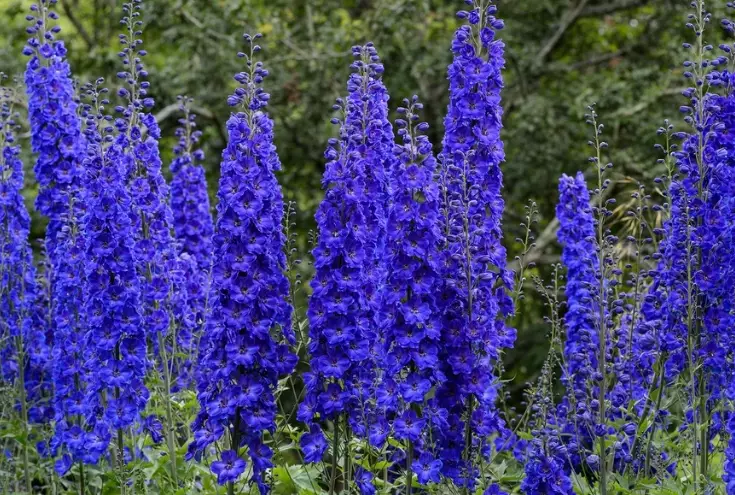
Start with Reputable Sources: Buy seeds or plants from specialist nurseries with good reviews. A cheap packet from a generic store is more likely to be a generic mix. If you want 'Blue Lace', get it from someone who knows their delphiniums.
Think About Placement: Match the colour to its spot. Pale colours get lost in dark corners. Dark colours get lost against dark fences. Place your white and pale pinks where they'll catch the evening light. Put your dark blues and purples against a light background.
The Feeding & Watering Balance: Consistent moisture is key, especially when the flower spikes are forming. Let them dry out and the flowers will be smaller, the colours weaker. A balanced, slow-release fertilizer applied in early spring is better than frequent liquid feeds. I made the mistake of overfeeding once, and got gigantic, floppy plants that needed constant rescue from the rain.
Staking: It's non-negotiable for the tall varieties. A fallen, mud-spattered spire of any colour is a tragedy. Stake early, stake firmly, and use materials that blend in.
Using Colours of Delphiniums in Garden Design
This is the fun part. Now that you know the palette, how do you use it?
The Monochromatic Scheme: All blues, or all pinks. But use different shades and textures. A deep blue delphinium behind a clump of silvery-blue sea holly (Eryngium) and a drift of blue catmint (Nepeta) is stunning. It's peaceful and cohesive.
The Classic Cottage Mix: This is where the mixed seed packs shine. Throw in pinks, blues, purples, and whites with some lupins, roses, and campanulas. It's cheerful, abundant, and hides a multitude of sins.
The Dramatic Contrast: Pair a deep purple delphinium like 'Black Knight' with bright yellow daylilies or a golden yew behind it. The contrast is electric. Or try a pure white delphinium in front of deep green foliage or against a burgundy-leaved plant like a smoke bush.
The Cool Retreat: Blues, whites, silvers, and pale pinks. Add white roses, silvery artemisia, and blue geraniums. This scheme feels cool and elegant even on the hottest day.
Answering Your Questions on Delphinium Colours
Over the years, I've heard and asked every question under the sun. Here are the real ones that matter.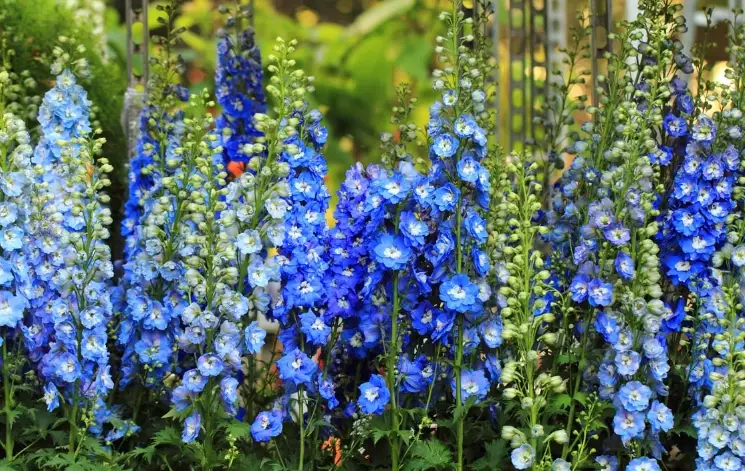
Good question. They're often *slightly* enhanced, but the best cultivars are truly that vivid. The issue is lighting. A photo taken in soft, morning light will show a truer colour than one in harsh noon sun. Look for photos from gardening forums or blogs (like the RHS community pages) where real gardeners post their results, not just stock photography.
Can I change the colour of my delphinium by changing the soil?Not reliably, no. Unlike some hydrangeas, delphinium colour is primarily determined by genetics. Soil pH might *influence* the intensity or shade slightly, but it won't turn a pink delphinium blue. You're better off buying the colour you want from the start.
Which colour is the hardest to grow?There's no definitive answer, but many gardeners find the very pale pinks and some of the highly bred, complex bicolours to be slightly less vigorous. The classic blues and whites from established series (like the Pacific Giants) are often the most reliable and disease-resistant. The trade-off for extraordinary colour can sometimes be a slightly more delicate constitution.
Do different colours have different scents?Most delphiniums have little to no fragrance. The appeal is visual, not olfactory. Some people detect a very faint, green, almost peppery scent up close, but it's not a feature. If you want fragrant spires, look toward stocks or some lilies instead.
Are all parts of all coloured delphiniums poisonous?Yes. This is critical. All delphiniums (consolida included) contain toxic alkaloids like delphinine in all parts of the plant, regardless of flower colour. They are poisonous if ingested and can cause severe skin irritation for some people. The Royal Horticultural Society and USDA Forest Service clearly list them as toxic. Wear gloves when handling them, especially if you have sensitive skin, and keep them away from pets and children who might nibble. The seeds are particularly toxic. This isn't meant to scare you off – many beautiful garden plants are toxic – but it's a necessary fact for safe gardening.
The Final Word on Colour
Exploring the colours of delphiniums is a journey. It starts with a simple search for "blue flowers" and can end with you becoming a connoisseur of mauve eyes and dusky picotees. The key is to experiment. Start with a reliable mix or a classic blue or white. See how they perform in your garden, in your light, in your soil.
Then get adventurous. Order that unusual pink you've been eyeing. Try a dark purple against a white wall. The beauty of gardening is that it's never final. If a colour doesn't work where you put it, you can move it (carefully, in autumn or spring).
The spectrum of colours of delphiniums offers a tool for every gardener's mood and design. From the serene to the dramatic, from the classic to the rare, there's a spire out there waiting to become the exclamation point in your summer garden. Don't just settle for blue. The whole rainbow is available, if you know where to look.