Quick Guide
- The Face in the Crowd: Identifying a Garryana Oak
- Not Just Any Oak: What Makes Garryana Oak Unique?
- From Forest to Barrel: The Uses of Garryana Oak
- The Tough Reality: Conservation Status and Threats
- Garryana Oak in Your Landscape
- Answers to Common Questions (Stuff People Actually Search)
- Wrapping It Up: A Tree Worth Knowing
Let's talk about a tree that doesn't get nearly enough attention. You've heard of the mighty Redwoods, the iconic Douglas Firs... but have you ever stopped to really look at the Garryana oak? If you live anywhere from British Columbia down to California, chances are you've walked right past one. They're not the flashiest trees in the forest. In fact, they often look a bit rough around the edges, especially in winter. But that's part of their charm. There's a whole story woven into their gnarled branches and deeply furrowed bark.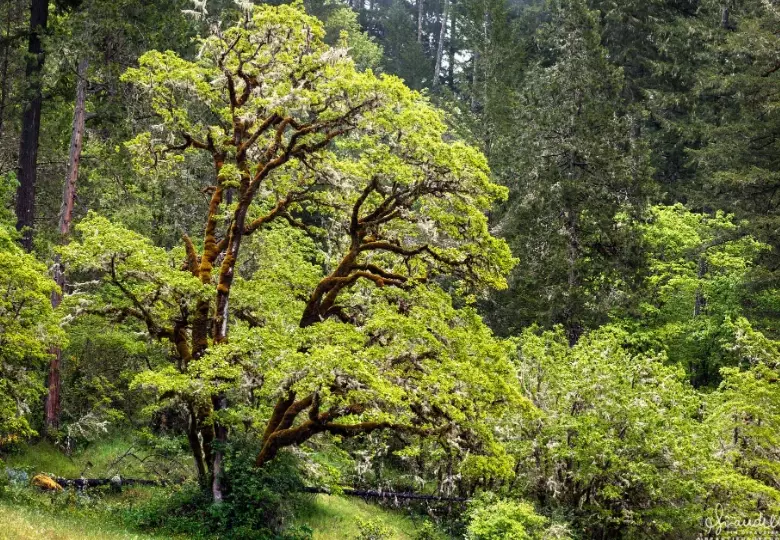
I remember the first time I really saw one. It was on a hike in the Willamette Valley. Most of the trail was lined with straight, tall conifers. Then, this oddball tree appeared. It was shorter, wider, with a crown that spread out like it was trying to give everything underneath it some shade. The leaves were all wrong for a pine tree—lobed and leathery. The bark looked like it had been through a few wars. A friend, who knew more than me, just said "Oh, that's an Oregon white oak." I nodded, but I was curious. It looked so different from the oaks I knew back east. That curiosity stuck with me, and years later, I'm still digging into the story of Quercus garryana.
Wait, What's in a Name?
This tree goes by a few aliases, which can get confusing. Its scientific name is Quercus garryana, honoring Nicholas Garry of the Hudson's Bay Company. Most people in everyday conversation call it the Oregon white oak. But you might also hear "Garry oak," especially up in Canada. For this article, we'll stick with Garryana oak—it feels a bit more specific and connects right back to that scientific name.
So why should you care about this particular tree? It's not the tallest, it's not the fastest growing, and honestly, it's not winning any beauty pageants against a flowering dogwood. But what it lacks in conventional glamour, it makes up for in sheer character and ecological grit. It's a foundational species for some of the most threatened ecosystems in the Pacific Northwest. Its wood has unique properties that have found a fascinating modern niche. And its story is deeply intertwined with human history, fire, and the ongoing challenge of conservation.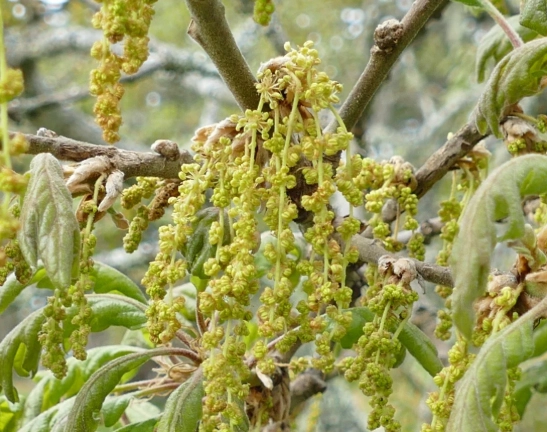
The Face in the Crowd: Identifying a Garryana Oak
Okay, so you're out for a walk and you think you see one. How can you be sure? Let's break down its look, because it's got a very distinct personality.
The Leaves are your first big clue. They're classic oak leaves—lobed—but with a Pacific Northwest twist. They're usually 3 to 6 inches long with 5 to 7 rounded lobes. The top is a shiny, dark green, while the underside is paler and can be a bit fuzzy. In the fall, they don't always put on a spectacular red show like some maples. They often just turn a dull yellow or brown and hang on stubbornly through much of the winter. It's not the most dramatic exit, but it's practical.
The Bark is where the Garryana oak shows its age and toughness. On young trees, it's fairly smooth and grayish. But as it matures, it develops these deep, rectangular furrows and thick, scaly ridges. It looks rugged, like the hide of an ancient animal. You can't mistake it for the bark of a fir or a cedar. This thick bark is actually a key survival tool, which we'll get to later.
The Form is another giveaway. In open, sunny areas (like the savannas it loves), it grows wide and spreading, with a short, thick trunk and massive lower limbs. It looks solid, grounded. In denser forests, where it's competing for light, it grows taller and more slender, but it never quite achieves the arrow-straight profile of a conifer. There's always a bit of a twist, a bend, a personality to its shape.
And then there are the Acorns. They're about an inch long, with a shallow, scaly cap that covers about a quarter of the nut. They're a vital food source for a ridiculous number of animals. Seeing a tree laden with acorns in the fall is a sure sign you're looking at an oak, and the size and cap shape can help pin it down as a Garryana.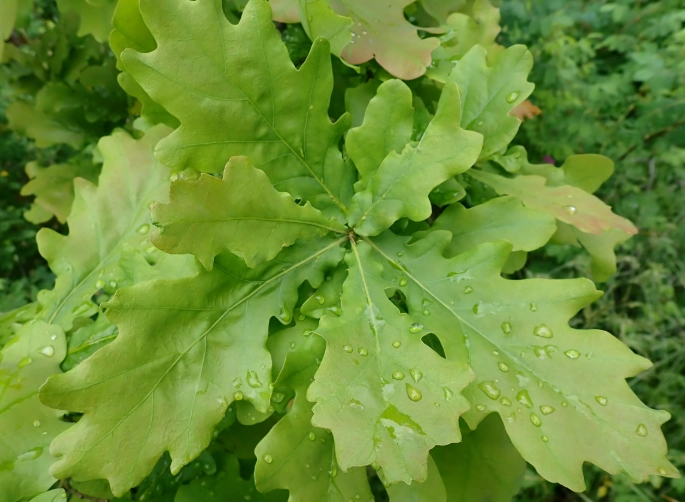
Quick ID Checklist:
- Location: Pacific Northwest (west of the Cascades). If you're in a pine forest in Idaho, it's something else.
- Leaves: Rounded lobes, 5-7 per leaf, shiny top, paler bottom.
- Bark: Mature trees have deeply furrowed, checkered, gray-brown bark.
- Shape: Often wide-spreading and craggy in open areas.
- Acorns: ~1 inch, shallow cap.
Not Just Any Oak: What Makes Garryana Oak Unique?
All oaks are great, but the Garryana oak has some special tricks up its sleeve (or in its roots) that let it thrive in places other trees can't handle.
The Drought Champion
This is its superpower. The Pacific Northwest has a reputation for being wet and rainy, but that's mostly west of the Cascades in winter. The areas where Garryana oak thrives—the rain-shadow valleys, the south-facing slopes—get bone-dry in the summer. While Douglas firs and other conifers are sucking up moisture, the Garryana oak has a deep taproot that goes hunting for water far underground. Its leaves are also thicker and waxier than many deciduous trees, which helps reduce water loss. It's built for summer drought in a way that many of its forest neighbors simply aren't. In a warming climate, this trait is becoming more and more valuable.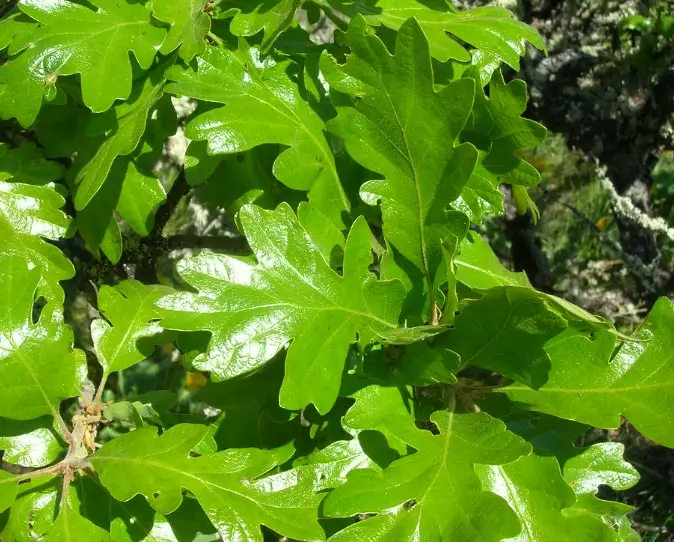
A Life Shaped by Fire
Here's a critical piece of the puzzle that often gets overlooked. For millennia, the oak savannas and woodlands of the Pacific Northwest were maintained by regular, low-intensity fires set by Indigenous peoples. These fires did two crucial things: they kept the faster-growing, shade-loving conifers and shrubs from encroaching and shading out the sun-loving oaks, and they recycled nutrients into the soil. The Garryana oak is adapted to this. That incredibly thick, furrowed bark? It's a fantastic insulator against heat. A ground fire might singe the base but rarely kills a mature tree. Meanwhile, fire-sensitive fir seedlings get wiped out. For over a century, we've suppressed fire. The result? Conifers have been slowly invading and shading out the oak stands. The tree's habitat is disappearing not just to development, but to a lack of its ancient ecological partner—fire.
An Ecosystem in a Tree
You can't overstate the ecological value of a single mature Garryana oak. It's like a high-rise apartment building and a grocery store combined for local wildlife. More than 200 species of vertebrates—mammals, birds, reptiles, amphibians—use these oak habitats. The acorns feed everything from band-tailed pigeons and woodpeckers to black-tailed deer and black bears. The cavities that form in its older limbs provide essential nesting sites for birds like the western bluebird and bats. The insects that live on and around it are a food buffet. Its fallen leaves create a unique soil environment. It's a biodiversity hotspot in tree form. The USDA Forest Service highlights its importance as a wildlife resource, noting its critical role in these fragmented habitats.
From Forest to Barrel: The Uses of Garryana Oak
This is where things get interesting for people who aren't just tree-huggers (though we are that too). The wood of the Garryana oak has properties that have carved out some very specific, and sometimes surprising, modern uses.
First, let's be honest about the wood. It's a hardwood, but it's not like working with maple or cherry. It can be tough, it has a prominent grain, and it's prone to checking (cracking) if not dried with extreme care. For a casual woodworker, it can be frustrating. I tried making a small box from a salvaged branch once, and let's just say it has "character" in the form of several hairline cracks I didn't plan for. It's not a forgiving wood.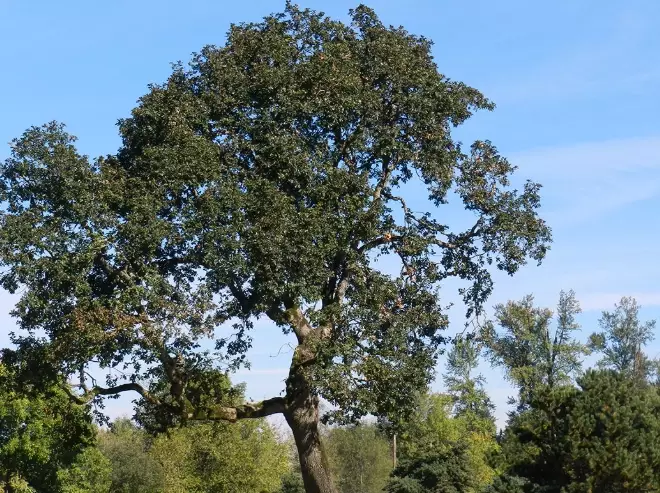
But when it's handled right, it's stunning. The grain is bold and often has a beautiful ray flake pattern. It finishes to a rich, warm color. Historically, it was used for shipbuilding, flooring, and furniture where strength was needed. You'll still find artisans crafting gorgeous, heirloom-quality tables and chairs from it today.
The Whiskey Connection: A Pacific Northwest Twist on an Old Tradition
This is the most talked-about modern use, and for good reason. The craft distilling boom, especially in Oregon and Washington, has created a huge demand for locally sourced materials. Distillers asked: why ship oak barrels from Missouri or France when we have our own native oak? Enter Garryana oak.
But it's not a simple swap. American white oak (Quercus alba), the standard for bourbon, and European oak (Quercus robur), used for wine and spirits, have different chemical profiles. Garryana oak is its own thing. Initial experiments showed it could be overpowering—imparting very strong vanilla, coconut, and spice notes (from compounds like vanillin and lactones) that could drown out the spirit. It was like using a very hot chili pepper.
The breakthrough came with experimentation. Distillers like Westward Whiskey in Portland pioneered techniques like using only a small percentage of Garryana oak staves in a barrel alongside other oak, or finishing a whiskey in a Garryana barrel for a shorter time. The result is a spirit with a distinct regional fingerprint—notes that people describe as dark chocolate, maple, toasted hazelnut, and a unique spice. It's become a premium, sought-after product. This commercial use has, ironically, helped raise the profile of the tree and underscored the value of sustainable management. They need a steady, responsibly harvested supply.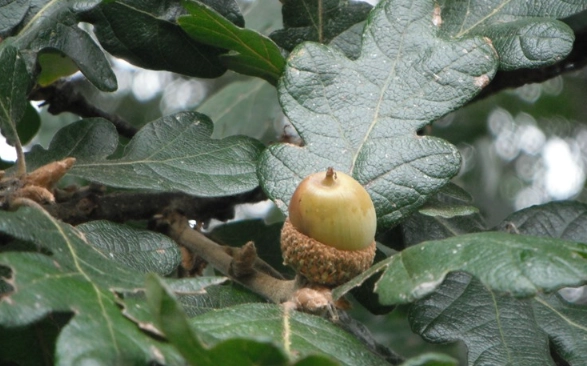
Here’s a quick look at how Garryana oak compares to its barrel-making cousins:
| Oak Species | Common Use | Typical Flavor Profile | Note on Garryana |
|---|---|---|---|
| American White Oak (Q. alba) | Bourbon, American whiskey | Strong vanilla, coconut, sweet | The industry standard. More predictable. |
| European Oak (Q. robur) | Wine, Cognac, Scotch | Spicy, tannic, clove, aromatic | Often used for longer aging. |
| Garryana Oak (Q. garryana) | Finishing/Premium PNW Spirits | Intense vanilla, dark chocolate, maple, spice | Potent & distinctive. Used carefully in blends or short finishes. |
The Tough Reality: Conservation Status and Threats
This is the hard part. For all its toughness, the Garryana oak ecosystem is one of the most endangered in the Pacific Northwest. Estimates suggest over 90% of its historic oak savanna habitat has been lost. Let's break down why.
Habitat Loss to Development: This is the big one. The very valleys and flatlands that were perfect for oak savannas—the Willamette Valley, the Puget Trough—are also perfect for farming, cities, and suburbs. Vast stands have simply been cleared.
Fire Suppression & Conifer Encroachment: As we talked about, without fire, Douglas fir, grand fir, and invasive shrubs like Himalayan blackberry move in. They grow faster, create shade, and the shade-intolerant oak seedlings can't survive. You get crowded, stagnant forests instead of open, park-like savannas. Old oaks die, and no young ones replace them.
Fragmentation: The remaining stands are often isolated in small patches. This makes it hard for wildlife to move between them and reduces genetic diversity for the trees themselves.
Lack of Regeneration: Even where old trees exist, you often see a "missing generation." There are grand old oaks and maybe some tiny seedlings, but few vigorous saplings or young trees. The conditions for them to grow to maturity—open sunlight, reduced competition—just aren't there anymore.
The good news? People are fighting for it. Organizations like the Garry Oak Ecosystems Recovery Team (GOERT) in Canada and numerous land trusts, parks departments, and volunteer groups in the US are actively working on restoration. This involves:
- Careful Thinning: Manually removing encroaching conifers and shrubs to open the canopy.
- Prescribed Burning: Reintroducing fire under controlled conditions to mimic historical processes. This is complex and controversial but ecologically essential.
- Planting Acorns: Collecting local acorns and planting them in protected, managed areas.
- Community Engagement: Getting landowners to value and protect oaks on their property.
It's an uphill battle, but it's one with visible, tangible progress in many areas.
Garryana Oak in Your Landscape
Maybe you're inspired and want to plant one. Should you? It depends.
If you have a large property in its native range (check a USDA distribution map to be sure), and you have a hot, dry, sunny spot with well-drained soil, it can be a magnificent, low-maintenance, and ecologically superstar tree. It will support local wildlife for generations. You need to give it space—these are not small patio trees. Think 50+ feet wide at maturity.
The downsides? It's slow-growing, so you need patience. The acorns can be messy if you park a car under it. And you have to be committed to not overwatering it—it wants a dry summer period.
For most suburban yards, it's probably too large. But advocating for its use in parks, school grounds, and commercial landscapes is a great way to support the species.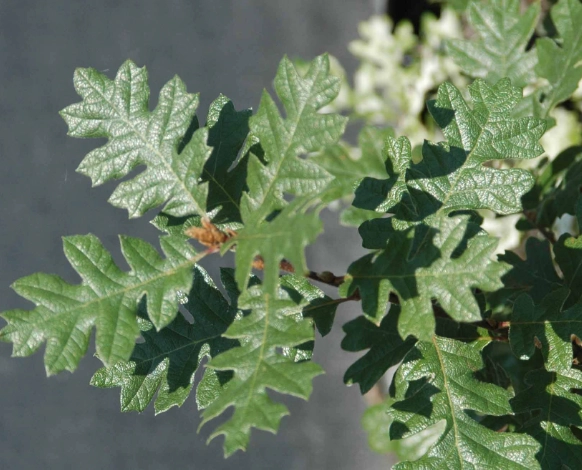
Answers to Common Questions (Stuff People Actually Search)
Wrapping It Up: A Tree Worth Knowing
The Garryana oak is more than just a tree. It's a symbol of a specific place—the sunny, dry edges of the Pacific Northwest. It's a lesson in ecology, showing how fire, climate, and species adapt together. It's a resource that connects history to modern craft, from ship timbers to whiskey glasses. And it's a survivor, hanging on in patches of land against immense pressure.
Next time you're out in the hills or valleys of Oregon, Washington, or British Columbia, keep an eye out for that broad, spreading crown and that deeply cracked bark. Take a closer look at the leaves. Maybe even find an acorn. You're not just looking at a tree; you're looking at a piece of a living, struggling, and absolutely vital ecosystem. The story of the Garryana oak is still being written, and its future depends a lot on whether we choose to value these rugged, beautiful, and deeply useful native trees.
It's not the loudest tree in the forest. But it might just be one of the most important.