Let’s be honest, when you think of a sunflower, you probably picture a giant, yellow flower head following the sun. It’s the poster child for happiness. I used to think that was all there was to them. A simple, cheerful plant. But then I tried growing some, and let me tell you, I was completely wrong. There’s a whole world to these plants that most people never see. From tiny dwarf varieties that fit in a pot on your balcony to towering giants that make you feel like you’re in a jungle, the diversity is staggering. And the uses? Don’t get me started. It’s not just about the seeds for your bird feeder.
This isn’t going to be a dry, textbook lecture. Think of it as a chat with a fellow gardening enthusiast who’s made a few mistakes (like planting them way too close together – what a tangled mess that was) and learned a lot along the way. We’ll dig into everything you’d actually want to know.
Why trust this? Well, besides my own trial and error, the information here pulls from solid sources. For instance, when we talk about plant classification and biology, it's good to know the Royal Horticultural Society (RHS) is a gold standard for gardeners. For scientific data on growth and agriculture, the U.S. Department of Agriculture (USDA) plant databases are indispensable. I’ll link to these where it makes sense, so you can go deeper if you want.
Getting Your Hands Dirty: A Realistic Sunflower Growing Guide
So you want to grow sunflowers. Great choice. They’re surprisingly forgiving, which is why they’re often recommended for kids and beginners. But to get those stunning, healthy blooms, a little know-how goes a long way.
Starting from Scratch: Seed to Soil
You can buy seedlings, but starting from seed is half the fun. It’s also cheaper and gives you way more variety. The most common question I get is, “When do I plant them?” The answer isn’t just a date.
- Timing is Everything: Wait until after the last frost. The soil needs to be warm, not cold and soggy. For most places, that’s late spring. I planted some too early once, and they just sat there, miserable, until the sun finally decided to stick around.
- The Spot: This is non-negotiable. Full sun. I mean full sun. At least 6-8 hours of direct, blazing sunlight. They’re called sunflowers for a reason. A partially shaded spot will give you weak, spindly stems and small heads. Trust me on this.
- Soil Secrets: They aren’t super picky, but they hate having wet feet. Well-draining soil is key. If your soil is heavy clay, mix in some compost or sand. A bit of fertilizer at planting helps, but don’t go overboard. Too much nitrogen gives you lots of leaves and few flowers.
The Care and Feeding of Your Sunflower Patch
Once they’re up, it’s mostly about watching them soar. But a few things will make a huge difference.
Watering Wisdom: Deep, infrequent watering is the mantra. Soak the soil thoroughly, then let it dry out a bit before watering again. Shallow watering encourages weak roots. During hot, dry spells, they’ll need more, especially the giant varieties. A good mulch around the base helps retain moisture and keeps weeds down.
Staking: For anything over 4 feet tall, consider a stake. A sudden summer storm can topple your pride and joy. Tie the stem loosely to a sturdy stake. It’s a simple step that prevents heartbreak.
Pests and Problems: Yes, they get them too. Birds and squirrels love the seeds (obviously). You can try netting or paper bags over the heads if you want to save them. Aphids can be a nuisance; a strong spray of water usually knocks them off. The worst I’ve dealt with is powdery mildew in a humid summer. Good air circulation is the best prevention.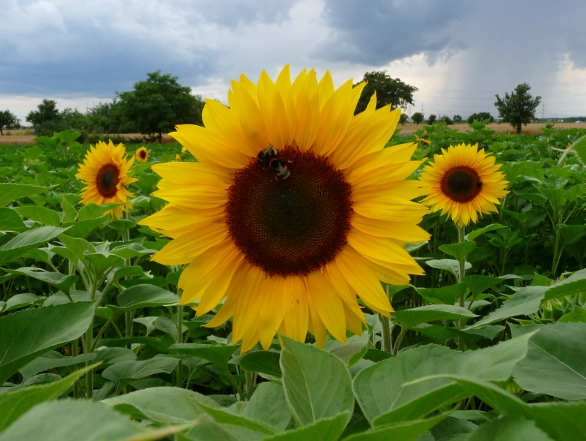
Beyond the Yellow Giant: A World of Sunflower Varieties
This is where it gets exciting. ‘Helianthus annuus’ has been bred into an incredible array of forms. Choosing the right type depends entirely on what you want.
Do you want a cut flower for a vase? A towering giant for the kids? Something multi-branched for a mass of color all summer? Here’s a breakdown that goes way beyond the standard.
| Variety Type | Best For | Height | Key Characteristics | My Personal Take |
|---|---|---|---|---|
| Giant Single-Stem | Show-stopping height, large seeds | 10-16 ft | One massive flower head. ‘Russian Mammoth’, ‘American Giant’. | Incredible for wow factor, but they dominate the garden. Harvesting seeds needs a ladder! |
| Branching/Bouquet | Continuous blooms, cutting gardens | 4-6 ft | Multiple flowers per plant over a long season. ‘Autumn Beauty’, ‘Sunrich’ series. | My favorite for constant color. Less dramatic than giants but more reliable and productive. |
| Dwarf/Container | Pots, small spaces, borders | 1-3 ft | Perfectly proportioned small plants. ‘Sunspot’, ‘Teddy Bear’ (pom-pom flowers!). | ‘Teddy Bear’ is adorable but the fluffy flowers can hold water and rot in rain. Cute, but fussy. |
| Pollenless Cultivars | Cut flowers, allergy-sensitive areas | Varies | Bred to produce no pollen, so they’re clean for vases. ‘Pro Cut’ series. | Great for bouquets, but remember: no pollen means less food for bees. A trade-off. |
See? There’s a type for every purpose. I’m partial to the branching types like ‘Autumn Beauty’ because you get a mix of burgundy, orange, and yellow on one plant. It feels like more value for your gardening effort.
So You’ve Grown Them… Now What? Practical Sunflower Uses
This is the part most guides skip. They show you the pretty flower and stop. But the sunflower is arguably one of the most useful plants you can grow. It’s not just ornamental.
The Obvious One: Seeds
Harvesting seeds is a ritual. You wait for the back of the head to turn brown and dry. The hard part is beating the birds to it. I cut the head with a long stem, hang it upside down in a dry, airy place (like a garage or shed) with a paper bag loosely over it to catch falling seeds. Once bone dry, rub the seeds out.
- Eating: Roast them! Toss raw seeds with a tiny bit of oil and salt, spread on a baking sheet, and roast at 300°F (150°C) for 30-40 minutes until golden, stirring occasionally. Let cool. They’re addictive.
- Bird Feed: The easiest use. Just put the whole dried head out or mix the seeds into your feeder. You’ll attract finches, chickadees, and nuthatches like crazy.
- Re-planting: Save your biggest, plumpest seeds for next year’s garden. Store them in a cool, dry place in a paper envelope.
The Not-So-Obvious Uses
This is where it gets interesting.
Natural Dye: The petals and even the heads can be used to create beautiful, natural dyes for fabric or wool. Simmering the petals yields yellows and golds, while the centers can give greens and browns. It’s a fantastic project if you’re into crafts.
Biomass and Phytoremediation: This is the superpower few talk about. Sunflowers are what scientists call hyperaccumulators. Their roots can help absorb and remove certain toxins, like heavy metals, from contaminated soil—a process called phytoremediation. Projects after nuclear disasters like Chernobyl used fields of sunflowers. It’s a serious, powerful use that goes far beyond the garden. The USDA Agricultural Research Service has published studies on this remarkable capability.
Stalks and Stems: Don’t just compost the thick stalks. In the garden, they make great natural stakes for next year’s peas or beans. Dry them out and use them. It’s full-circle gardening.
The Story Behind the Sun: Symbolism and Culture
Why are we so drawn to this plant? It’s not an accident. The sunflower carries a heavy load of meaning across cultures and history.
Its scientific name, Helianthus, comes from Greek: helios (sun) and anthos (flower). But the “following the sun” behavior, called heliotropism, is only in young flower buds. Once the heavy head matures, it typically faces east. Still, the myth is powerful.
In many Native American cultures, the sunflower was a vital crop, cultivated for food, oil, and dye long before Europeans arrived. It represented harvest and sustenance.
In art, Van Gogh’s series is the most famous. But have you looked at them closely? They’re not all vibrant and happy. Some are in various stages of decay. To me, they speak more to the cycle of life, from brilliant life to withering, than to simple joy. It’s a more complex, and honestly, more interesting interpretation.
Today, it’s a global symbol of happiness, optimism, and longevity. It’s also become a symbol of support for various causes, often representing hope and a search for light in dark times. This deep cultural footprint explains why the sunflower feels so familiar and important, even if you’ve never grown one yourself.
Your Sunflower Questions, Answered (The Real Ones)
Let’s tackle the stuff people actually type into Google. No fluff.
How long do sunflowers take to bloom?
From sowing seed, most take between 70 to 100 days. The giant ones are often on the longer end. Read your seed packet! It’s the best guide for your specific variety.
Are sunflowers annuals or perennials?
The classic big yellow ones are annuals (Helianthus annuus). They grow, flower, set seed, and die in one season. There are perennial sunflower species (like Helianthus maximiliani), but they look different—smaller flowers, spreading habits. You’re probably thinking of the annuals.
Can you grow sunflowers in pots?
Absolutely. But choose a dwarf or medium variety and a large pot (at least 12-16 inches deep and wide). Use good potting mix and water more frequently, as pots dry out fast. A giant sunflower in a tiny pot will be stunted and unhappy.
Are sunflowers toxic to pets?
According to the ASPCA, sunflowers are non-toxic to dogs, cats, and horses. The plant itself is safe. However, the shells of salted, roasted seeds aren’t great for pets, and a dog eating a whole dried head might get a stomach ache from the fibrous material. Stick to the plain seeds in moderation.
Why are my sunflower leaves turning yellow?
Could be a few things. Overwatering is a prime suspect (soggy soil). Underwatering (dry, crispy edges first). Or a nutrient deficiency, often nitrogen. Check your watering habits first.
Do sunflowers really attract bees?
Yes, especially the pollen-producing varieties. They are a fantastic source of late-summer pollen and nectar for honeybees, bumblebees, and countless native pollinators. Planting them is a great way to support local ecosystems. The pollenless types, bred for cutting, do not offer this benefit.
Wrapping It Up: The Takeaway on Sunflowers
Look, the sunflower is easy to love at first glance. But I hope you see now that its beauty is just the beginning. It’s a plant of incredible utility, from your snack bowl to potentially cleaning soil. It’s a historical crop and a cultural icon. It can be a 2-foot-tall burst of cheer on your patio or a 15-foot-tall jungle giant in your backyard.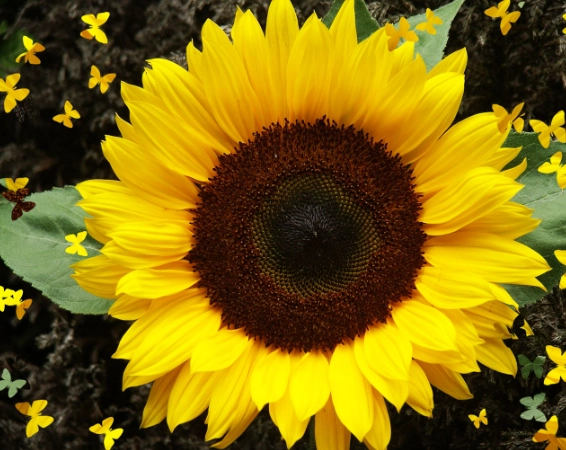
The best part? It’s accessible. A few seeds, a sunny spot, and a bit of patience are all you need to start. You might fail—I’ve had my share of duds—but when it works, there’s nothing quite like the sight of those broad, sunny faces greeting you in the morning.
So go grab a packet of seeds. Try a variety you’ve never heard of. Roast some seeds. Watch the bees visit. There’s a whole experience wrapped up in this one plant, waiting for you to dig in.