In This Guide
Let's be real for a second. How many of us have brought home a beautiful, vibrant houseplant only to watch it slowly (or sometimes not so slowly) turn into a sad, crispy, or mushy version of its former self? I've been there. My first fiddle leaf fig, which I lovingly named "Frank," met a tragic end involving over-enthusiastic watering and a dark corner. I felt like I had a black thumb.
But here's the thing I learned: keeping a houseplant alive isn't about having a magical green thumb. It's about understanding a few basic things that these quiet, leafy roommates need. It's decoding their silent language. Once you get that, it's less about luck and more about simple, consistent care.
This guide isn't going to throw a bunch of complex botanical terms at you. We're going to talk about houseplant care like you're chatting with a friend who's managed to keep a few plants alive long enough to learn from their mistakes (that's me). We'll cover the absolute essentials, troubleshoot the common disasters, and maybe even convince you to try a plant you thought was "too difficult."
Why Bother with a Houseplant Anyway?
Before we dive into the how, let's talk about the why. Sure, they look nice. But beyond aesthetics, sharing your home with plants has some pretty solid benefits. Research, like the classic NASA Clean Air Study (you can find a summary on the NASA website), has looked at how certain plants can help remove common volatile organic compounds (VOCs) from indoor air. Now, don't expect a single spider plant to purify your entire apartment – the effect is more subtle and works best with good ventilation. But it's a nice bonus.
For me, the bigger benefits are mental. Tending to my indoor plants is a form of mindfulness. It forces me to slow down, observe, and do a simple, nurturing task. There's a real sense of accomplishment when you see a new leaf unfurl. Studies have shown that being around greenery can reduce stress and even boost creativity and focus. In a world of screens, a living houseplant is a tangible connection to nature.
Honestly, they're also just great company. A room with a few well-placed indoor plants feels more alive, more welcoming, and just... better.
How to Choose Your First (or Next) Houseplant
This is where most people go wrong. They fall in love with a stunning, delicate-looking plant at the store without considering if their home is the right environment for it. It's like adopting a husky when you live in a small, hot apartment with no time for walks – a recipe for stress for both of you.
The single most important question to ask is: What is the light like in the spot where I want to put this houseplant?
Light is food for plants. Get this wrong, and nothing else matters. Don't guess. Actually observe the spot over a day or two. Is it direct sun for several hours (a south-facing window, usually)? Is it bright but indirect light (east or west-facing)? Or is it a lower-light area further from a window (north-facing or a room corner)?
Once you know your light, you can match a plant to it. Here’s a cheat sheet to get you started.
| Light Condition | What It Looks Like | Great Beginner Houseplant Options | One to Avoid as a Newbie |
|---|---|---|---|
| Bright, Direct Light (South/West window) | Sunbeams directly hit the spot for 4+ hours. Can feel warm. | Succulents (Echeveria, Jade Plant), Cacti, Bird of Paradise, Ficus lyrata (if acclimated). | Most ferns. They'll fry. |
| Bright, Indirect Light (East window or near South/West) | Very bright, but no harsh sun rays directly on leaves. The sweet spot for many plants. | Monstera Deliciosa, Pothos, Philodendron, Spider Plant, Rubber Plant, ZZ Plant. | Not many! This is prime real estate. |
| Medium to Low Light (North window or several feet from any window) | Clearly lit, but no direct sun. Shadows are soft but defined. | Snake Plant (Sansevieria), ZZ Plant, Peace Lily, Cast Iron Plant, some Philodendrons (e.g., Heartleaf). | Flowering plants or cacti. They'll become leggy and sad. |
My personal advice for a total beginner? Start with a Pothos or a Snake Plant. I'm serious. They are forgiving, communicate their needs (Pothos leaves droop when thirsty, Snake Plant leaves wrinkle), and can handle a range of light conditions. A win with a tough houseplant builds confidence.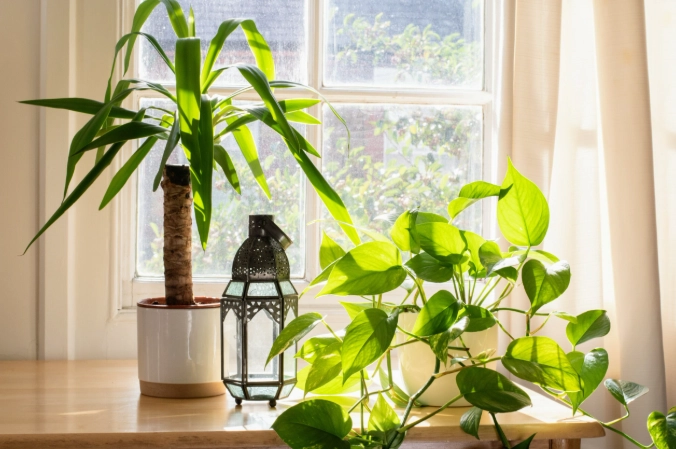
The Five Pillars of Houseplant Care (Forget Everything Else For Now)
You can read a thousand articles with conflicting advice. It's overwhelming. So let's simplify. If you get these five things mostly right, your indoor plants will not just survive, they'll thrive.
1. Light: The Non-Negotiable
We already touched on this, but it's worth repeating. A plant's light needs are its number one requirement. A "low light" houseplant doesn't mean "no light." It means it can tolerate lower light, but it will grow slower. If you want growth, you need to provide more light.
See a plant getting "leggy" (long stretches of stem between leaves) or leaning desperately towards the window? It's begging for more light. Leaves losing their variegation (fancy stripes or spots) and turning solid green? That's the plant ditching its fancy patterns to produce more chlorophyll to catch the scarce light.
2. Watering: The Number One Killer
Overwatering. It's the silent assassin of more houseplants than anything else. Our instinct is to love them with water, but most indoor plants prefer to dry out a bit between drinks.
Forget the schedule. Don't water every Sunday because it's Sunday. Your plant doesn't know what day it is. Water when the plant needs it. How do you know?
- The Finger Test: Stick your finger into the soil up to your first knuckle (about 2 inches). Is it dry? Then water. Is it still damp? Wait. This works for about 80% of common houseplants.
- For Succulents & Cacti: Let the soil dry out completely, then wait a bit longer. Seriously. They store water in their leaves/stems.
- For Moisture-Lovers (e.g., Ferns, Peace Lily): Keep the soil consistently moist (like a wrung-out sponge), but never soggy.
When you do water, water thoroughly. Take the plant to the sink and water until it runs freely out of the drainage holes. This ensures the entire root ball gets hydrated. Then, let it drain completely before putting it back in its decorative pot. No plant likes wet feet!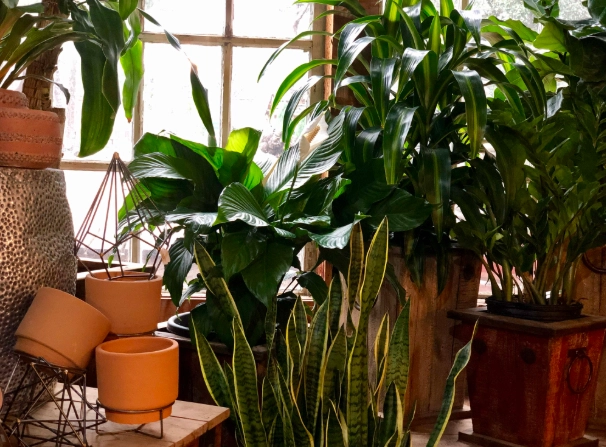
“The best watering can is your own finger. Get in there and feel the soil. It tells you everything.”
3. Soil & Pots: The Foundation
That dense, peat-heavy soil your plant came in from the big-box store? It's often terrible. It holds too much water for too long, especially indoors where air circulation is low.
When you repot (which you should do every 1-2 years, or when roots are circling the bottom), use a well-draining potting mix. For most tropical houseplants, a standard potting mix with some perlite or orchid bark mixed in is perfect. For succulents and cacti, use a specific cactus/succulent mix, or make your own with plenty of perlite and coarse sand.
And the pot! Drainage holes are non-optional. No arguments. Use a nursery pot with holes and place it inside a prettier cache pot if you must. But never let a houseplant sit in a pot with no way for excess water to escape. It's a death sentence.
4. Humidity: The Invisible Need
This is a big one, especially in winter when heaters are running. Many popular houseplants (Monstera, Philodendron, Ferns, Calathea) are tropical natives. They crave humidity that our homes often lack.
Signs of low humidity: brown, crispy leaf tips; leaf edges curling; new leaves struggling to unfurl.
Solutions:
- Group plants together. They create their own little humid microclimate.
- Use a pebble tray. Fill a tray with pebbles and water, set the pot on top (not in the water). Evaporation helps.
- Mist sparingly. It provides a very temporary boost and can promote fungal issues on some plants. I'm not a huge fan.
- Get a humidifier. The real solution for a serious plant collection in a dry climate.
5. Food (Fertilizer): The Vitamin Boost
Plants growing in pots use up the nutrients in their soil. Fertilizer replaces those nutrients. But it's easy to overdo it, which can burn roots.
Simple rule: Fertilize during the growing season (spring and summer), and rarely or not at all in fall and winter when growth slows. Use a balanced, water-soluble fertilizer (look for something like a 10-10-10 or 20-20-20 formula) and dilute it to half the strength recommended on the bottle. Less is more. I fertilize my actively growing indoor plants about once a month from April to September.
Diagnosing Common Houseplant Problems: A Troubleshooting Guide
Your plant is sending you signals. Here’s how to decode them.
| Symptom | Likely Cause | What To Do |
|---|---|---|
| Yellowing leaves, especially lower ones. Soil feels wet. | Overwatering / Root Rot | Stop watering immediately. Check roots. If they're brown/mushy, cut them off, repot in fresh dry soil, and hope. Improve drainage. Water less. |
| Brown, crispy leaf tips or edges. | Low humidity or inconsistent watering (letting it get too dry). | Increase humidity (see above). Try to water more consistently before the plant gets bone dry. |
| Leaves drooping, wilting. Soil feels dry. | Underwatering | Give it a good, thorough drink. It should perk up in a few hours. If the soil is very dry, it may repel water – soak the pot in a basin of water for 30 mins. |
| Small, pale leaves. Leggy growth. | Insufficient light | Move the plant to a brighter location. Consider a grow light for dark spaces. |
| Sticky residue on leaves or tiny webs. | Pests (Scale, Mealybugs, Spider Mites) | Isolate the plant! Wipe leaves with soapy water or neem oil solution. For severe cases, use an insecticidal soap. Persistence is key. |
Pests happen to everyone. Don't be embarrassed. The key is to catch them early. Regularly wipe down leaves (it's good for the plant anyway) and inspect the undersides and stems. Resources like the Missouri Botanical Garden's Plant Finder can be invaluable for identifying specific plant issues.
Leveling Up: Propagation & Specific Plant Deep Dives
Once you've kept a houseplant alive for a year, you might catch the bug. The next thrill is making more plants from the ones you have. Propagation feels like magic.
The easiest way to start? With a Pothos or Philodendron.
- Cut a stem just below a node (the little bump where a leaf meets the stem).
- Place the cutting in a jar of water, ensuring the node is submerged.
- Put it in bright, indirect light.
- Wait. Change the water weekly. In a few weeks, you'll see roots!
- Once the roots are a few inches long, pot it up in soil. Congratulations, you've cloned your plant.
Some plants, like Snake Plants or ZZ Plants, can be propagated by leaf cuttings or division. It's a fun, rewarding way to expand your collection or share with friends.
Caring for a Few Popular (and Sometimes Tricky) Houseplants
Fiddle Leaf Fig (Ficus lyrata): The drama queen. It needs very bright, indirect light (think right in front of a south or east-facing window). Let the top 2-3 inches of soil dry out between waterings. Do not move it around. It hates drafts. It will likely drop a leaf or two when you first bring it home. Don't panic. It's adjusting.
Monstera Deliciosa: More forgiving than its reputation. Bright, indirect light is key for those iconic split leaves. Let the top inch or two of soil dry. Wipe its large leaves with a damp cloth to keep them dust-free and photosynthesizing efficiently. It loves humidity.
Succulents & Cacti: Their mantra is neglect with love. Tons of light. Let the soil go completely dry, then wait another week before watering. In winter, water them maybe once a month. Use a gritty, fast-draining soil mix. Overwatering is the only real enemy.
Your Houseplant Questions, Answered
The journey with houseplants is a learning process. Every brown leaf is a lesson, every new shoot a victory. Start simple, observe closely, and don't be afraid to get your hands dirty.
Ultimately, caring for a houseplant is a relationship. You provide the basics, and it responds with growth and beauty. It teaches patience and observation. You'll have setbacks. I still lose a plant now and then. But the joy of a thriving indoor jungle you've nurtured yourself is worth it.
So go ahead. Pick a plant that matches your light. Get a pot with a hole in the bottom. And just start. You might be surprised at how green your thumb really is.