Quick Guide
You know that feeling when you're walking on a windswept hillside and the ground is just... alive with color? A carpet of tiny bells in shades of purple, pink, and white, humming with bees even when everything else seems asleep. That's flowering heather for you. It's tough, it's beautiful, and it has this quiet, stubborn magic that's hard to explain. I remember the first time I really saw it, not just as a greenish-purple blur from a car window, but up close. I was on a hike, my feet were sore, and I sat down on what I thought was a mossy rock. It was a heather-covered bank. And for a solid ten minutes, I just looked at the intricate little flowers, each one perfect. I was hooked.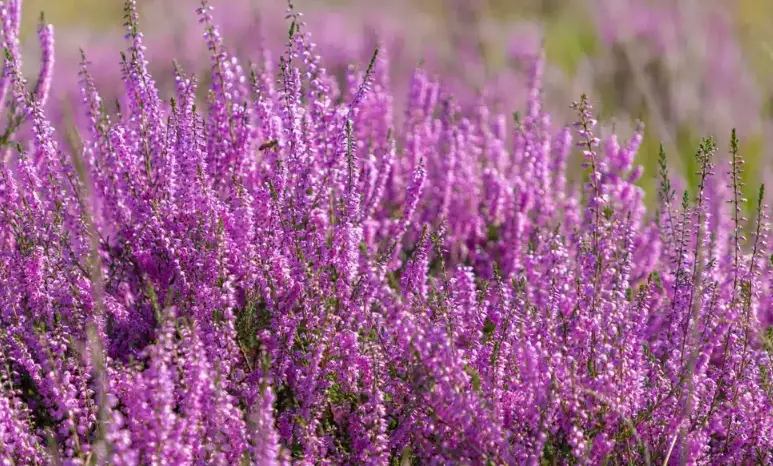
But here's the thing a lot of gardening sites don't tell you: bringing that wild, moorland magic into your own garden isn't always straightforward. You can't just plonk it anywhere and hope for the best. I've killed my share of heather plants, believe me. Too much love (in the form of water and rich soil) can be just as fatal as neglect. So let's skip the generic advice and talk about what it really takes to grow flourishing flowering heather, the kind that makes your neighbors stop and ask, "What is that?".
The Non-Negotiable Foundation: Soil and Site
If you get nothing else right, get this right. This is the make-or-break factor for flowering heather. Forget everything you know about feeding plants. Heather is a member of the Ericaceae family, which means it's an acid-loving plant, or what gardeners call "ericaceous." Its roots have a special relationship with soil fungi (mycorrhiza) that only works in acidic conditions.
So what if your soil is wrong? You have options, and I've tried them all.
- Raised Beds or Mounds: This is my preferred method. You fill a contained area with the right soil mix from the start. It gives you total control.
- Container Gardening: Perfect for patios and balconies. Use a large pot (heather has wide, shallow roots) filled with ericaceous compost. This is a brilliant way to enjoy flowering heather up close.
- Amending the Soil: For in-ground planting, you need to dig in a lot of ericaceous compost and maybe even powdered sulphur to lower the pH. It's work, and it's an ongoing battle if your native soil is chalky or clay-based.
Sunlight is the other biggie. Flowering heather loves full sun. I mean, it craves it. Six hours minimum. More sun equals more flowers, denser growth, and better winter color on the foliage. I made the mistake of planting some in dappled shade once. It grew, sure, but it was leggy, flowered sparsely, and just looked sad and apologetic.
Picking Your Heather: It's Not All Purple
This is where the fun begins. "Heather" usually refers to two main genera: Calluna (true Scotch heather) and Erica (heath). The difference? Calluna has scale-like leaves and blooms from mid-summer to late autumn. Erica often has needle-like leaves, and some species, like Erica carnea (winter heath), bloom from late winter to spring. Planting a mix gives you year-round interest.
Let's break down some show-stoppers. I'm not just listing names; these are varieties I've grown or seen thriving in friends' gardens.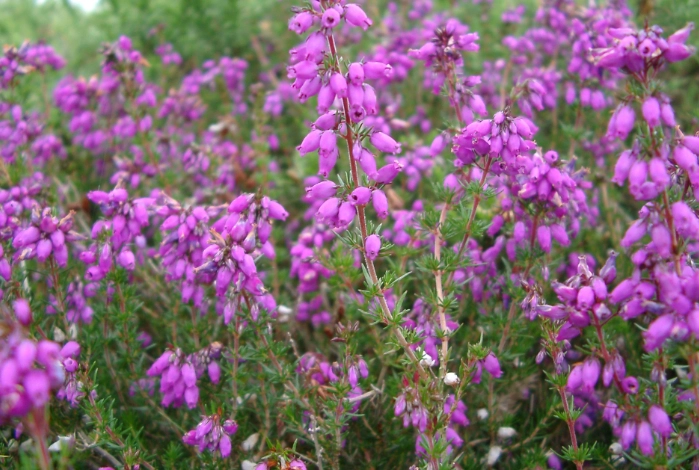
| Variety Name | Type | Flower & Foliage Color | Bloom Time & Key Feature | My Personal Take |
|---|---|---|---|---|
| Calluna vulgaris 'Firefly' | Scotch Heather | Mauve flowers, foliage changes from yellow-orange in summer to fiery red in winter. | Late Summer-Autumn. The foliage is the main event. | An absolute stunner. The winter color is unreal. Surprisingly tough once established. |
| Erica carnea 'Springwood White' | Winter Heath | Pure white flowers, bright green foliage. | Dec - April. A beacon in the bleak winter garden. | Incredibly reliable. Spreads nicely to form a dense carpet. Never fails to lift my spirits in January. |
| Calluna vulgaris 'Silver Knight' | Scotch Heather | Lilac-pink flowers, silvery-grey foliage. | Late Summer-Autumn. Elegant, muted color scheme. | Looks fantastic with purple-leaved plants. The silver foliage is less "in your face" than some others. |
| Erica x darleyensis 'Kramer's Rote' | Darley Dale Heath | Deep magenta-pink flowers, dark green foliage. | Nov - May. One of the longest blooming heaths. | A prolific bloomer. Can look a bit messy if not lightly trimmed. But you can't argue with 6 months of color. |
The Care Routine: Less is More
Okay, you've planted your flowering heather in acid soil, in full sun. Now what? The mantra is benign neglect.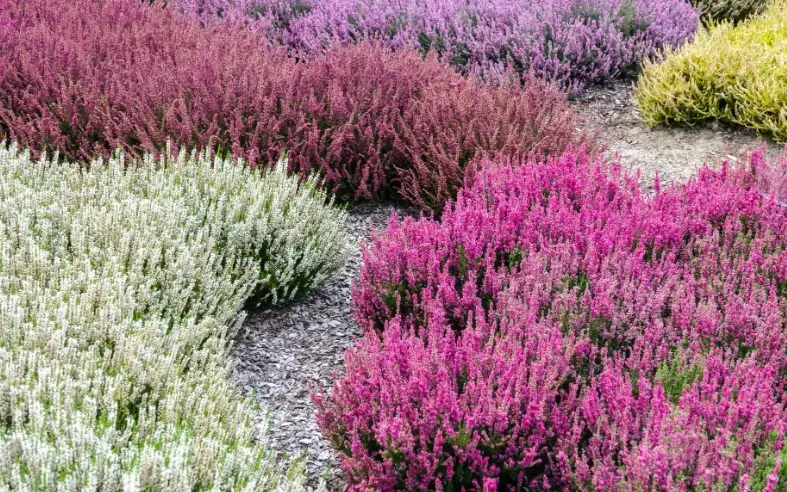
Watering: The Delicate Balance
This is the trickiest part initially. Flowering heather hates wet feet. Soggy soil rots the roots faster than you can say "drought-tolerant." But newly planted heather needs consistent moisture to establish. See the dilemma?
Feeding: Skip the Miracle-Gro
Do not feed your flowering heather with general-purpose fertilizer. The high phosphorus levels can damage it. If your plants look a bit pale in spring, use a light top-dressing of ericaceous compost or a fertilizer specifically formulated for acid-loving plants (like one for rhododendrons and azaleas). Once a year, max. More often than not, they need no feed at all.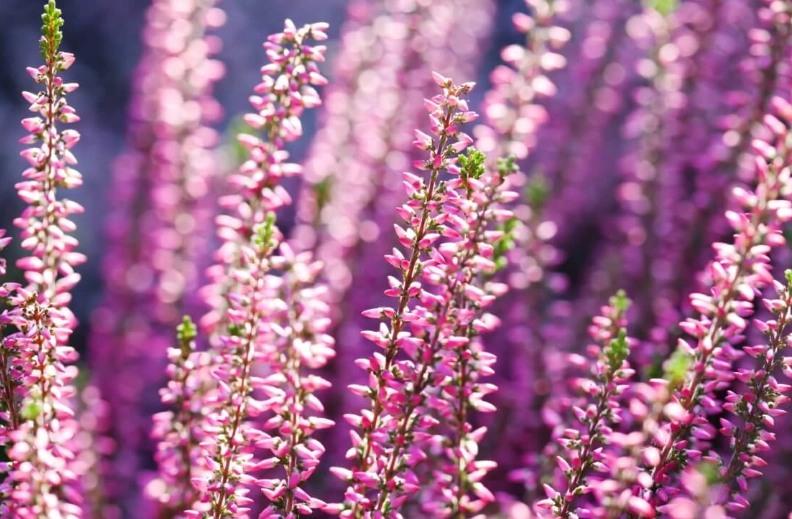
Pruning: The Secret to a Long Life
This is crucial. If you let heather grow tall and woody, it becomes leggy, flowers only at the tips, and eventually splits open in the center. Ugly. The goal is to encourage dense, bushy growth from the base.
You prune right after flowering.
- For summer/autumn blooming Calluna: Prune in early spring.
- For winter/spring blooming Erica: Prune right after the flowers fade in late spring.
Don't be shy. Take your shears and cut off the spent flower stems, cutting back into the green, leafy growth below. Never cut back into the old, bare brown wood—it often won't re-sprout. I use hedge shears for large patches and just give them a gentle haircut. It's oddly satisfying.
Designing with Heather: Beyond the Heather Bed
Sure, you can make a whole bed of just flowering heather—a tapestry of different colors and textures. It's a classic look. But let's think outside the box.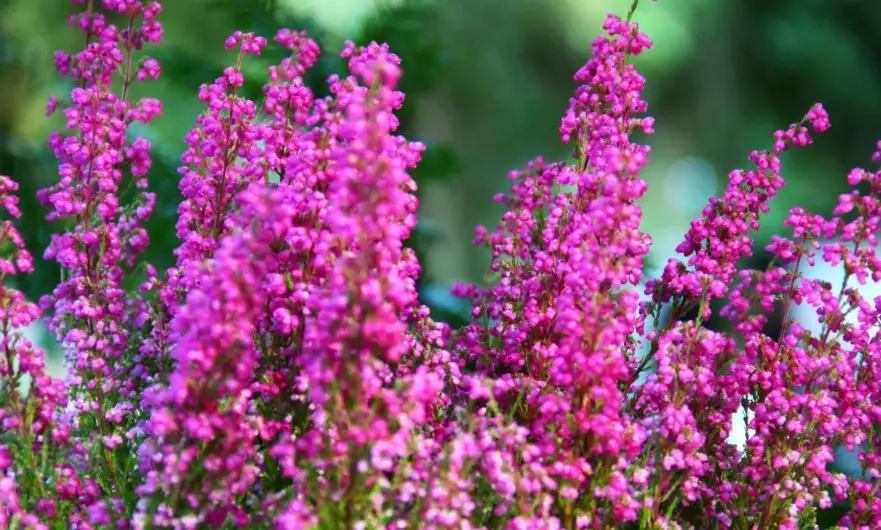
Heather is a fantastic companion plant. Its fine, often colorful foliage and tiny flowers act as a beautiful foil for other acid-lovers.
- With Conifers: The blue of a dwarf spruce (Picea glauca 'Conica') against the gold of a Calluna is stunning.
- With Other Ericaceous Stars: Picture the bold, glossy leaves of a small rhododendron surrounded by a carpet of flowering heather in a contrasting color. The scale works perfectly.
- In Rock Gardens: It's a natural. The well-drained conditions are ideal, and the low, spreading habit looks right at home among the stones.
- For Slope Erosion Control: Those mat-forming roots are excellent at holding soil in place on a sunny bank.
Solving the Inevitable Problems
Even with perfect care, things happen. Here's the troubleshooting guide I wish I'd had.
Yellowing Leaves (Chlorosis): Almost always a soil pH problem. Test your soil. If it's too alkaline, you need to apply a soil acidifier like sulphur chips or use sequestered iron as a quick fix. For potted plants, repot with fresh ericaceous compost.
Brown Patches or Dieback: Could be root rot from waterlogging. Check drainage. Could also be a fungal disease like Phytophthora, especially in wet weather. Improve air circulation, avoid overhead watering, and remove affected parts. In severe cases, remove the plant to prevent spread.
Lack of Flowers: Not enough sun. Or, you pruned at the wrong time and cut off the forming flower buds. Or, it's getting too much nitrogen fertilizer (which promotes leaf growth over flowers).
Pests are rarely a serious issue for flowering heather. The occasional aphid might appear, but a strong spray of water usually deals with it. Birds sometimes pull at the stems for nesting material, which is more charming than destructive.
The Cultural Tapestry: More Than Just a Pretty Face
You can't talk about flowering heather without touching on its history. In Scotland, white heather is considered lucky, a symbol of protection. It was used for thatching, bedding, brooms, and even to make ale. The famous line "the heather is in bloom" from the novel Kidnapped evokes a whole landscape and feeling.
It's a vital plant for wildlife. When it's in bloom, the sound of bees on a heather hillside is a loud, contented hum. It provides crucial late-season nectar. The dense foliage offers shelter for insects and small animals.
For a deeper dive into the botanical and ecological specifics, the Royal Horticultural Society (RHS) website is an impeccable resource. Their page on growing heathers and heaths is packed with scientifically sound, practical advice. For checking the hardiness of specific varieties in your area, the USDA Plant Hardiness Zone Map is the gold standard, and you can find your zone on the official USDA website.
Your Flowering Heather Questions, Answered
At the end of the day, growing flowering heather is about embracing a different gardening philosophy. It's not about constant feeding and watering. It's about setting up the right conditions—acidic, well-drained soil, plenty of sun—and then stepping back. It rewards patience and a light touch. When you get it right, you don't just have a plant; you have a little piece of wild, enduring landscape right in your garden, buzzing with life and glowing with color when you least expect it. And that's a feeling no generic garden center annual can ever give you.