Quick Navigation
- What Exactly is Vinca Minor?
- Planting and Initial Care: Getting It Right from the Start
- The Good, The Bad, and The Spready: Weighing It Up
- Ongoing Care and (The Crucial) Containment
- Common Problems (Besides Its Ambition)
- Vinca Minor vs. The Alternatives
- Answers to Questions You're Probably Asking
- The Final Verdict: Should You Plant Vinca Minor?
Let's talk about vinca minor. You've probably seen it. That lush, green carpet with pretty little blue or purple flowers that seems to thrive where nothing else will – under trees, on slopes, in that gloomy corner of the yard that gets maybe two hours of sun. My neighbor swears by it. She planted a few small pots ten years ago, and now it's a sea of green that never seems to need watering. Sounds perfect, right?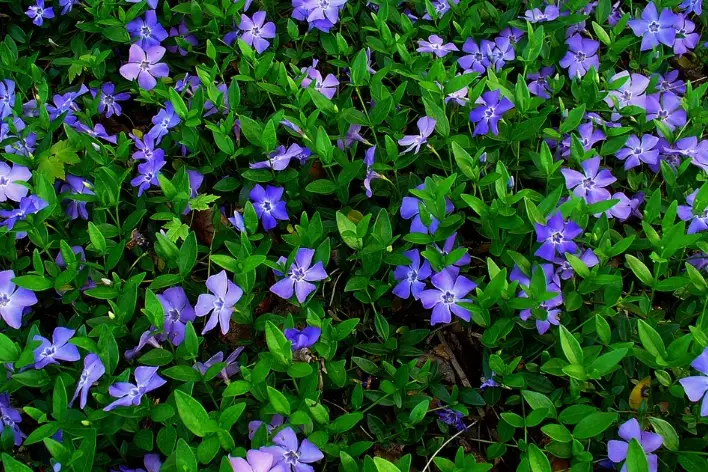
Well, I planted some too, back when I first moved into my house. I had this terrible shady patch next to the garage, just dirt and moss. Someone at the nursery handed me a flat of vinca minor, saying it was foolproof. And for a while, it was. It filled in beautifully, choked out the weeds, and even flowered. But then it didn't stop. It crept under the fence. It started popping up in the lawn. I found a runner trying to sneak into a flower bed twenty feet away. That's when I realized this plant has a serious dual personality.
In a nutshell: Vinca minor, also called common periwinkle or myrtle, is a perennial evergreen ground cover. It's famous for its toughness, its ability to grow in deep shade, and its charming spring flowers. But it's also infamous for its vigorous, sometimes invasive, spreading habit. Knowing both sides is key to a happy relationship with this plant.
What Exactly is Vinca Minor?
Before we get into the how-to, let's be clear on what we're dealing with. Vinca minor is a low-growing, vining plant (a subshrub, technically). It's native to central and southern Europe, but it's made itself at home in many parts of North America. The "minor" part refers to its smaller leaves and flowers compared to its cousin, Vinca major.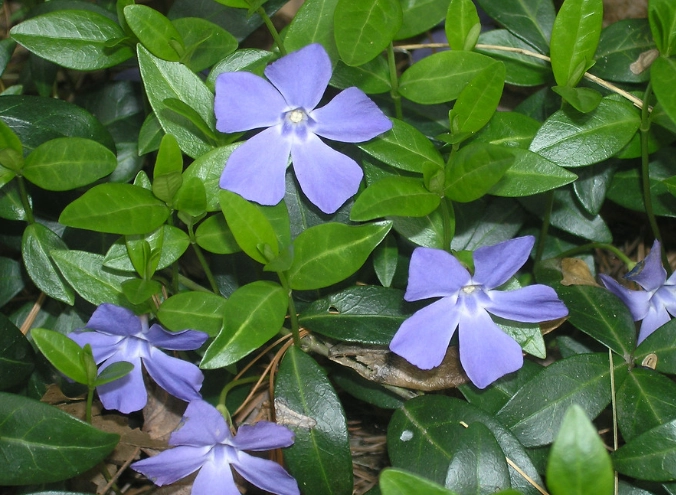
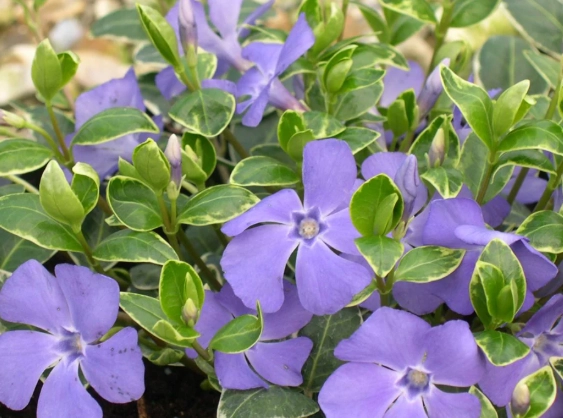
The leaves are glossy, dark green, and oval-shaped, arranged opposite each other on the stem. They stay on the plant all year, which is a huge plus for winter interest. The flowers are what really sell it – a lovely five-petaled pinwheel, usually in shades of periwinkle blue or violet, that appear mainly in spring but can sporadically show up again in summer and fall.
It grows by sending out long stems (stolons) that root at the nodes. This is its superpower and its curse. One plant can cover a significant area over time. That's why you often see it used for erosion control on banks or as a living mulch under trees.
Planting and Initial Care: Getting It Right from the Start
Okay, so you're tempted. You have that problem spot. Here's how to give your vinca minor the best start, which ironically can also help you keep it in check later.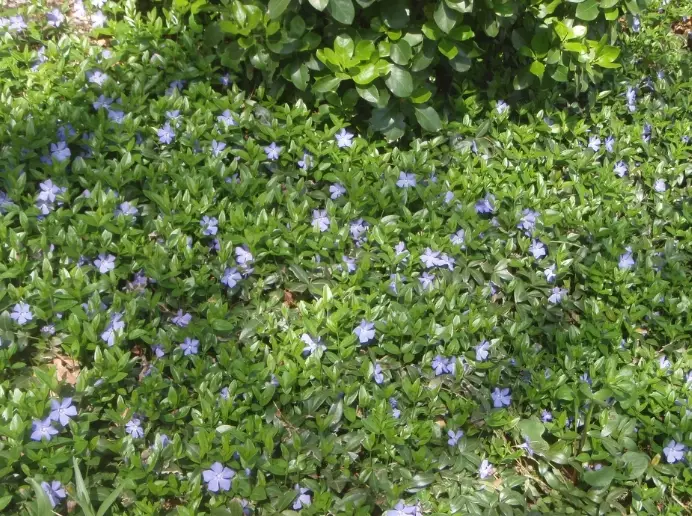
The Ideal Soil and Location
Vinca minor isn't picky, but it has preferences. It likes well-drained soil. It will tolerate heavy clay, but it won't be happy in a perpetually soggy spot. If your soil is pure clay, amending it with some compost is a good idea.
Now, the light. This is its claim to fame. Vinca minor thrives in partial to full shade. It's one of the best flowering plants for deep shade. Full sun? It can handle it in cooler climates if it has enough moisture, but in hot areas, the leaves can scorch and turn yellow. That shady north side of the house or the ground under a dense maple tree? Perfect vinca minor territory.
I made the mistake of planting a section in too much sun. It survived, sure, but it looked stressed all summer – pale and less dense. The patch in deep shade? It was lush and dark green. Lesson learned.
How to Plant It
You usually buy vinca minor in small pots or flats. Spring or early fall are the best times to plant, when the weather is mild.
- Prep the area: Clear out weeds and grass thoroughly. You really don't want to be weeding through a mat of vinca later.
- Space them out: Plant them about 12 to 18 inches apart. They'll fill in the gaps faster than you think. If you're on a budget or patient, go for 18 inches. If you want coverage quickly, go for 12 inches.
- Plant at the right depth: Set the plant in the hole so the top of the root ball is level with the soil surface. Backfill, firm the soil gently, and water well.
Water the new plants regularly for the first season to help them establish. After that, they're remarkably drought-tolerant. That's one of their biggest perks.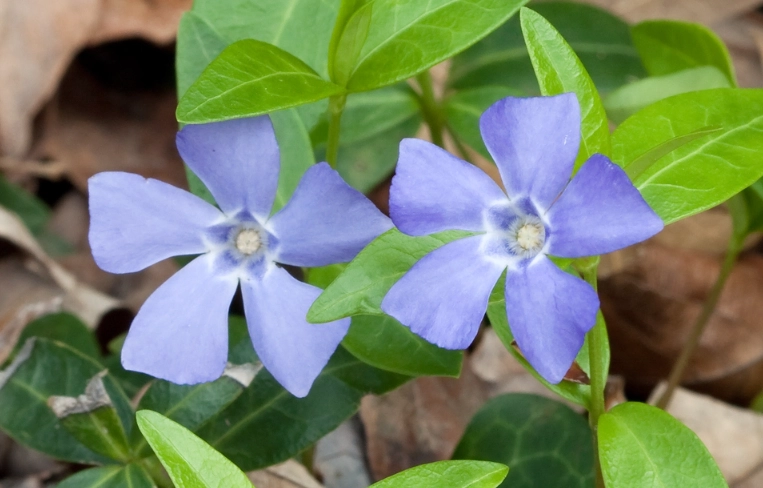
The Good, The Bad, and The Spready: Weighing It Up
Let's be real. No plant is perfect. To decide if vinca minor is for you, you need to see the full picture.
| Pros (The Reasons to Love It) | Cons (The Reasons for Caution) |
|---|---|
| Super Shade Tolerant: Blooms where most plants just sulk. | Vigorous Spreader: Can become invasive, escaping into natural areas. |
| Low Maintenance: Once established, needs little water or care. | Difficult to Remove: Every little rooted piece can regrow. |
| Excellent Erosion Control: Roots densely, holding soil on slopes. | Can Smother Other Plants: Will overwhelm small, delicate plants. |
| Evergreen Foliage: Provides year-round color and cover. | Can Look Unkempt: Without occasional tidying, can get matted. |
| Deer and Rabbit Resistant: Animals generally avoid it. | Limited Ecological Value: Doesn't support many native pollinators compared to native ground covers. |
That last con is a big one that's getting more attention lately. While insects might visit the flowers, vinca minor isn't a host plant for butterfly or moth caterpillars like many native plants are. If you're gardening for wildlife, this is a consideration. Resources from university extensions, like the University of Minnesota Extension, often discuss the ecological impact of non-native groundcovers.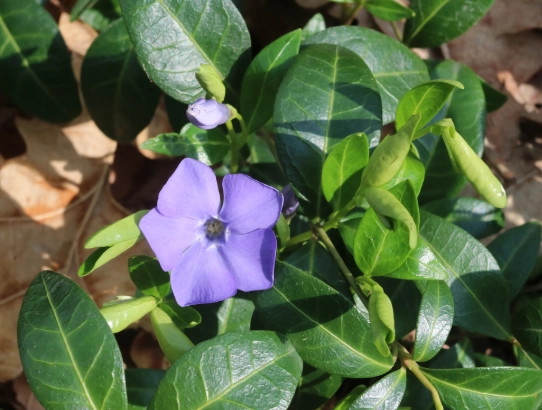
Ongoing Care and (The Crucial) Containment
Assuming you've planted it and you're happy with its growth, maintenance is minimal. But "containment" is the word of the day.
Basic Maintenance
- Watering: Almost never for established patches. Only during extreme, prolonged drought.
- Fertilizing: Usually unnecessary. In very poor soil, a light application of balanced fertilizer in early spring can boost growth.
- Pruning/Tidying: In early spring, you can give it a mow or a trim with shears or a string trimmer set high (3-4 inches). This cleans up winter damage, encourages fresh new growth, and can promote more flowers. I do this every other year on my patch.
How to Keep Vinca Minor from Taking Over
This is the most important part of caring for this plant. You must be the boss.
Critical: Do not plant vinca minor near natural areas like woodlands, streams, or meadows. Its potential to escape cultivation and outcompete native flora is a serious concern in many regions. Always check with your local extension service to see if it's listed as invasive in your area. The Invasive Plant Atlas is a useful resource to consult.
For garden containment:
- Edging is Your Friend: Install a deep, physical barrier. A metal or plastic landscape edging sunk at least 6-8 inches into the ground around the planted area can block the runners. Check it annually for escapees.
- Regular Patrols: Walk the perimeter every few weeks during the growing season. Pull or clip any runners that are venturing where they shouldn't. It's much easier to pull a young, unrooted runner than to dig out an established patch later.
- Strategic Placement: Use hardscapes as boundaries. Plant it against a sidewalk, driveway, or foundation where it can be easily trimmed back.
If it does escape into the lawn, regular mowing will usually kill it, as it can't tolerate being cut that short. But in flower beds, it's a real pain to remove.
It's a plant that rewards vigilance.
Common Problems (Besides Its Ambition)
Vinca minor is tough, but not invincible. Here's what can go wrong:
- Yellowing Leaves: Usually a sign of too much sun or poor, waterlogged soil. Sometimes it's just old leaves shedding naturally.
- Stem Canker or Dieback: Fungal diseases can cause stems to turn black and die back, especially in wet, humid conditions. Improving air circulation and removing affected stems is the best cure.
- Aphids: They might show up on new growth, but a strong spray of water usually handles them. Serious pest issues are rare.
Honestly, disease and pests are the least of your worries with this plant. Its own vigor is its main "problem."
Vinca Minor vs. The Alternatives
What if you love the idea but are nervous about the spread? Or maybe you want something more ecologically supportive? Let's compare.
For Shade:
- Pachysandra: Another classic, evergreen shade ground cover. Slower spreading than vinca, forms a neater clump, but can also be invasive in some areas.
- Lamium (Dead Nettle): Has attractive silver-variegated leaves and flowers. Spreads but is usually easier to pull than vinca. Can be a bit floppy.
- Native Option: Asarum canadense (Wild Ginger): A beautiful, slow-spreading native with heart-shaped leaves. No showy flowers, but excellent for native ecosystems. Requires moist, rich soil.
For Dry Shade (The Holy Grail):
- This is where vinca minor truly shines. Few plants combine its tolerance for dry soil and deep shade. Epimedium is a good, well-behaved alternative but often prefers a bit more moisture.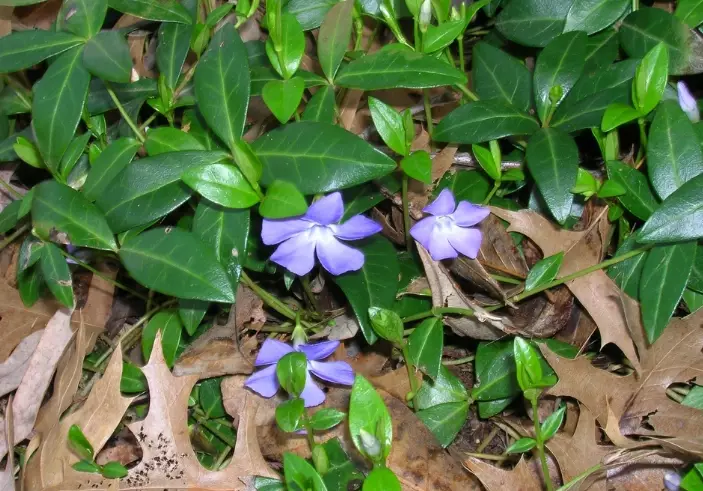
Answers to Questions You're Probably Asking
The Final Verdict: Should You Plant Vinca Minor?
Here's my take, after years of living with it.
Vinca minor is a fantastic, nearly bulletproof solution for a specific set of problems: a contained, difficult, dry-shade area where you want evergreen coverage with minimal work. Think of a fenced-in side yard, a contained planting bed between a house and a driveway, a shady bank contained by a sidewalk below, or a large container.
It is a poor choice for casual planting in mixed borders, near property lines without barriers, or anywhere close to natural spaces. The risk of it becoming a nuisance or an ecological problem is too high.
If you do choose to plant vinca minor, go in with your eyes open. Appreciate its toughness and beauty, but respect its aggressive nature. Be the gardener in charge, not the one chasing it around the yard with a shovel. With clear boundaries and a little monitoring, you can have a beautiful, low-care ground cover that solves a real landscaping headache. Just don't say I didn't warn you about its adventurous streak.
For the most accurate, region-specific advice on whether this plant is suitable for your location, I always recommend checking with your state's land-grant university extension service. They have the local knowledge about invasive tendencies and best practices.
So, is vinca minor the right ground cover for you? It depends entirely on your site, your willingness to manage it, and your gardening philosophy. For that tough, shady spot behind my garage, I'm keeping mine. But I'm also keeping my edging sharp and my eyes peeled.