You see aphids clustering on your rose buds. Your first instinct might be to reach for a spray bottle. I get it, I've been there. But what if I told you that those aphids are actually an invitation? They're the first link in a chain that, if you let it, brings in an army of free pest control to your garden. This chain is your garden's food web, and understanding it is the single most powerful shift you can make from being a garden manager to a garden facilitator.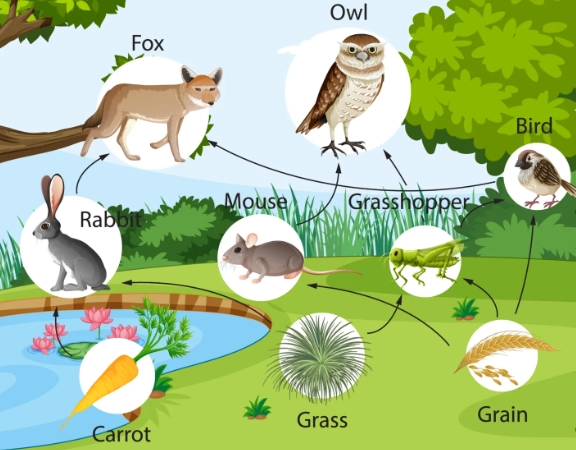
It's not just theory. In my own small urban plot, after I stopped spraying and started planting for predators, the aphid outbreaks that used to decimate my kale became minor, short-lived events. A complex, buzzing network took over the job. This guide will show you how to see your garden not as a collection of plants, but as a living, breathing ecosystem where every creature has a role.
What's Inside?
What Exactly is a Garden Food Web? (It's Not Just a Chain)
Most people picture a simple food chain: aphid eats plant, ladybug eats aphid, bird eats ladybug. Reality in your garden is messier and more beautiful. It's a food web—a tangled network of who eats whom, and also who competes with whom, who provides shelter for whom, and who breaks down waste for everyone else.
Let's map a tiny part of it. Start with a broad bean plant (producer). Aphids (herbivore) suck its sap. A ladybug larva (primary predator) hunts the aphids. But a spider (secondary predator) might also catch the ladybug. When any of these creatures die, earthworms and fungi (decomposers) break them down, releasing nutrients back to the soil for the broad bean. Meanwhile, tiny parasitoid wasps (parasitoids) lay eggs inside the aphids, controlling them from within. See the web?
The goal isn't to eliminate pests. That's impossible and ecologically naive. The goal is to achieve balance, where no one species—plant or animal—gets so out of control that it causes significant damage. Your job is to create the conditions where this balance can happen.
Why Bother? The Tangible Benefits of a Working Food Web
This isn't just feel-good ecology. The payoffs are immediate and practical.
First, reduced pest pressure. When you have a resident population of predatory insects, they notice pest outbreaks before you do. Lacewing larvae are voracious aphid hunters. Ground beetles patrol the soil for slug eggs and cutworms. They work 24/7, for free.
Second, healthier plants and soil. A diverse web above ground mirrors a diverse web below ground. Mycorrhizal fungi form partnerships with plant roots. Worms aerate the soil. This biological activity leads to more resilient plants that are better at resisting disease and stress. Resources like the USDA's Natural Resources Conservation Service emphasize soil health as the foundation of any productive system.
Finally, less work and cost for you. You spend less money on pesticides and fertilizers. You spend less time monitoring and treating problems. The garden begins to self-regulate. It becomes more interesting, too. Watching a hoverfly larva mow down a colony of aphids is far more satisfying than spraying them.
How to Build Your Garden's Food Web from the Ground Up
Think of this as a four-step recruitment and retention plan for beneficial insects.
Step 1: Plant the Ultimate Insect Restaurant (Shelter & Food)
Predatory insects need more than just pests to eat. They need pollen and nectar for energy, especially as adults. Many need sheltered spots to overwinter. Your planting plan is your recruitment brochure.
Plant in clusters, not singles. A single marigold does little. A patch of them is a beacon. Focus on plants with small, open flowers that provide easy access to nectar. My top performers for attracting a diversity of beneficials are:
- Dill, Fennel, Cilantro (let them flower): These umbel flowers are landing pads for ladybugs, lacewings, and tiny parasitoid wasps.
- Calendula & Alyssum: Long-blooming, easy to grow, and loved by hoverflies (whose larvae eat a staggering number of aphids).
- Native flowering perennials: Check with your local university extension service for native plants that support local insect populations. These are often the best fit.
Step 2: Provide Permanent Housing
A tidy, bare garden is a desert for beneficials. They need hiding places.
- Leave a small, undisturbed pile of rocks or logs.
- Allow a corner of your garden to grow a little "wild" with perennial grasses or native plants.
- Use mulch (straw, wood chips, leaves) generously. It shelters ground beetles and spiders, retains moisture, and feeds the soil web.
I stopped cleaning up all my plant debris in the fall. Those hollow stems of old sunflowers and raspberry canes? They're now full of overwintering solitary bees and other insects. It looks a bit messy in March, but it's teeming with life.
Step 3: Manage the "Problem" Species Thoughtfully
You will have pests. The key is to intervene in ways that don't nuke the entire food web.
Hand-picking: Still the most targeted method for larger pests like cabbage worms or hornworms.
Strong water spray: Knocks aphids off plants, disrupting colonies and making them vulnerable to ground predators.
Biological controls: As a last resort for a severe, localized infestation, you can purchase and release specific predators like Cryptolaemus beetles for mealybugs. But this is a supplement, not a foundation. A better investment is plants that attract the native predators already in your area.
Step 4: Observe and Adjust
Spend five minutes a day just watching. See who visits the fennel flowers. Turn over a leaf and see who's hiding underneath. This isn't idle time; it's critical research. You'll start to recognize the good guys and understand the rhythms of your garden's web.
3 Common Mistakes That Break Your Garden's Food Web
Here’s where that "10 years of experience" perspective comes in. These are the subtle errors I see even well-intentioned gardeners make.
| Mistake | Why It's a Problem | The Better Approach |
|---|---|---|
| Using broad-spectrum insecticides (even "organic" ones like pyrethrin). | It kills everything—pests, predators, and pollinators. It's like using a bomb to fix a leaky faucet. You reset your web to zero, often causing a worse pest rebound. | If you must intervene, use the most targeted method possible. Insecticidal soaps or horticultural oils can work if applied directly to pests, sparing others. |
| Keeping the garden too clean and tidy. | Removing all plant debris and leaving bare soil eliminates overwintering sites and shelter for predatory insects and spiders. | Practice "lazy" gardening in the fall. Leave some stems standing, leave some leaf litter. Create designated habitat zones. |
| Planting only one type of crop in a large block (monoculture). | This is an all-you-can-eat buffet for pests. It's easy for them to find their host plant and explode in numbers, overwhelming any local predators. | Interplant! Mix flowers and herbs in with your vegetables. The diversity confuses pests and provides constant resources for their enemies. |
The biggest shift is mental. Stop seeing insects as "good" or "bad." See them as parts of a system. Your role is to nurture the whole system, not to police its individual members.
Your Food Web Questions, Answered
Starting this journey changes everything. You stop fighting your garden and start collaborating with it. The first time you spot a lacewing larva—a tiny, pale predator with huge sickle-shaped jaws—carrying an aphid carcass on its back like a trophy, you'll know you're not just growing plants anymore. You're stewarding a world.
Put down the spray bottle. Plant some dill. Watch what happens.