You've seen them. A line of ants marching across your kitchen counter, a honeybee buzzing from flower to flower, the faint rustle of termites in an old log. We often swat, spray, or step on them without a second thought. But pause for a moment. What you're looking at isn't just an insect; it's a single cell of a vast, living superorganism. Social insects—ants, bees, wasps, and termites—represent one of evolution's most stunning successes. They don't just live in groups; they operate as a single entity, a colony where individuals are like specialized organs in a body. There's no CEO, no central command, yet they build skyscrapers, farm fungi, wage wars, and communicate with chemical precision. Understanding how they do this isn't just trivia; it reshapes how you see your garden, your home, and the entire ecosystem.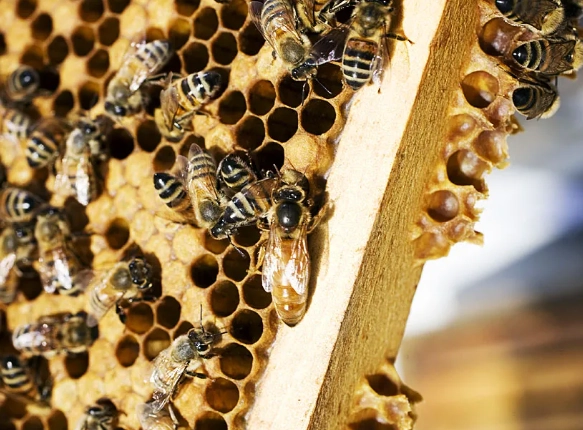
Your Quick Guide to the Social Insect World
The Superorganism: More Than Just a Colony
Calling an ant hill a "nest" is like calling New York City a "collection of buildings." It misses the point entirely. The colony is the organism. The queen isn't a ruler giving orders; she's the reproductive organ. The workers are the muscles, the immune system, and the foraging limbs. Soldiers are the teeth and claws. This concept, championed by biologists like E.O. Wilson, changes everything.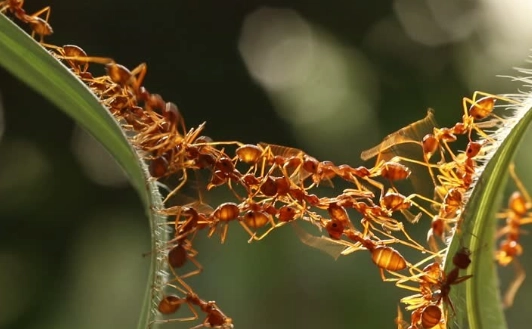
Their success hinges on three pillars you won't find in any solitary bug: cooperative brood care (adults look after young that aren't their own), overlapping generations, and a division of labor into reproductive and non-reproductive castes. This last one is the big one. Most individuals sacrifice their own chance to reproduce to support the queen, ensuring their genes are passed on indirectly through their siblings. It's the ultimate team strategy.
Ants: Masters of Earthmoving and Chemical Warfare
With over 12,000 known species, ants are the most ubiquitous social insects. I once spent an afternoon watching a colony of Pheidole (big-headed ants) dismantle a dead cricket. The coordination was military. Tiny minors swarmed over it, cutting and pulling, while larger majors stood guard, their oversized heads blocking the nest entrance from intruders.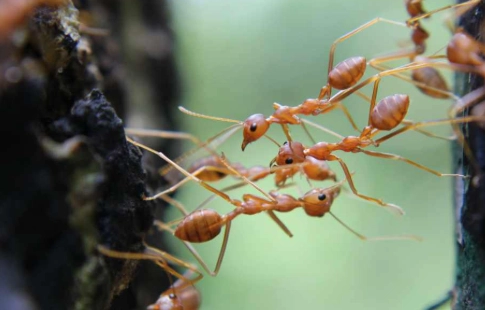
Colony Structure: Queens, Workers, and Soldiers
It's not just one type of worker. Many species have physical sub-castes, a polymorphism tuned for specific jobs. Minor workers are the foragers and nurses. Major workers or soldiers, with their powerful jaws or plug-shaped heads, defend. The queen's sole job is laying eggs, sometimes thousands a day. In some species, like the invasive Argentine ant, multiple queens cooperate, creating sprawling "supercolonies" that can stretch for miles.
Communication: The Power of Pheromones
Forget words. Ants speak in chemicals. A forager finding food lays a trail pheromone back to the nest. Others follow, reinforcing the trail if the food is good, letting it fade if it's not. An alarm pheromone sends nearby ants into a defensive frenzy. A pheromone from the queen suppresses the workers' ability to lay eggs. Their world is a landscape of invisible chemical signposts. The common mistake? Thinking wiping away an ant trail solves the problem. You've just erased a street sign. The city hall (the nest) is still there, and it will send out surveyors to draw a new map.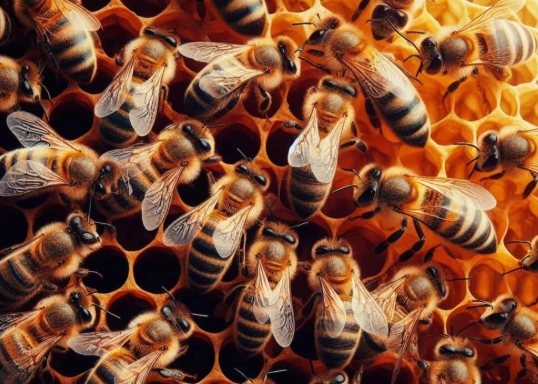
Bees: The Dancers and Architects
Bees, particularly honey bees (Apis mellifera), are the poster children for complex cooperation. A healthy hive in summer houses 50,000+ individuals, all working to precise standards of temperature (34.5°C/94.1°F in the brood nest) and humidity.
The waggle dance is their crowning achievement. A returning forager performs a figure-eight dance on the honeycomb. The angle of the straight "waggle" run relative to gravity indicates the direction to the food source relative to the sun. The duration of the waggle tells the distance. It's a symbolic language for giving GPS coordinates. Research from sources like Scientific American has shown its astonishing accuracy.
But life in the hive isn't a utopia. Workers have a strict age-based career path: cleaning cells, then nursing larvae, then building comb, then guarding the entrance, and finally foraging. A forager bee works herself to death in about two weeks. The hive's efficiency is built on this relentless, programmed labor.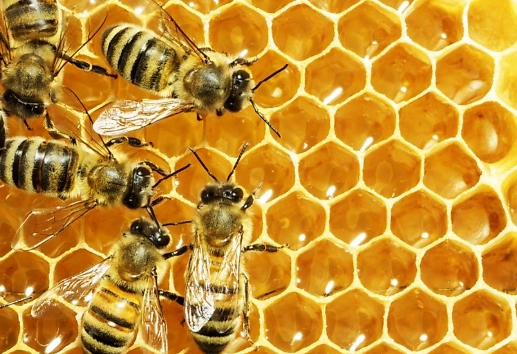
| Feature | Honey Bee Colony | Bumble Bee Colony |
|---|---|---|
| Colony Size | Large (10,000-80,000) | Small (50-400) |
| Overwinters As | Entire colony | Only the new queen |
| Nest Material | Self-produced wax | Wax pots & existing cavities |
| Key Human Benefit | Honey production, major crop pollination | Excellent pollination of tomatoes, berries ("buzz pollination") |
Termites: The Silent Recyclers
Often confused with ants, termites are actually social cockroaches. They're the planet's ultimate decomposers, breaking down tough cellulose in wood and returning nutrients to the soil. Without them, forests would be buried in dead wood.
Their social structure is fascinatingly different. Termite colonies have a king and queen pair that mate for life. The workers and soldiers can be male or female. And they practice a form of agriculture that puts us to shame. Many termites cultivate fungi in elaborate underground "gardens." They chew wood into a compost, inoculate it with fungal spores, and then harvest the nutrient-rich fungal nodules to feed the colony. It's a symbiotic relationship millions of years old.
The architectural feat of their mounds, like those of African Macrotermes, is legendary. These are not just piles of dirt; they are sophisticated climate-control systems with chimneys, ducts, and tunnels that regulate temperature and gas exchange for the fungus gardens deep below. Engineers study them for passive cooling design principles.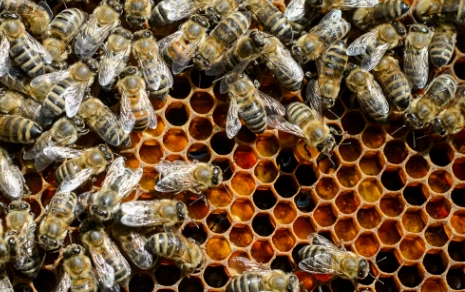
Why Social Insects Matter (Beyond the Sting)
It's easy to see them as pests. Fire ants sting, carpenter ants damage wood, and termites can wreck a house. But the ecological view is bigger.
They are keystone species. Ants turn and aerate more soil than earthworms. They disperse seeds for countless plants. Bees pollinate about one-third of the food we eat. Termites are the foundation of nutrient cycles in tropics and subtropics. A study often cited by the Smithsonian suggests the total biomass of ants on Earth rivals that of humans. They are a fundamental force in nearly every terrestrial ecosystem.
For us, understanding their biology is the key to smarter coexistence. Effective pest control isn't about annihilation; it's about understanding colony biology to target the queen and the nest structure. Appreciating bees drives conservation of pollinators. Studying their swarm intelligence inspires algorithms for robotics and network management.
Next time you see that line of ants, don't just see pests. See a superorganism on a mission, a tiny piece of the ancient, complex machinery that keeps our world running.
Reader Comments