Let's be honest, grafting has this reputation. It seems like a secret art practiced by old men in orchards, all precise cuts and mysterious wax. I thought that too, until a prized heirloom tomato plant of mine got hit with a nasty soil-borne wilt. It was heartbreaking. A friend, a retired nurseryman, saw my dismay and said, "You know, you could have just grafted it." That was my lightbulb moment.
Grafting isn't about showing off. It's a practical, problem-solving tool. It's taking the top part of one plant (the scion) and fusing it to the root system of another (the rootstock). Why? Because the rootstock often has traits the scion lacks—disease resistance, drought tolerance, vigor in poor soil.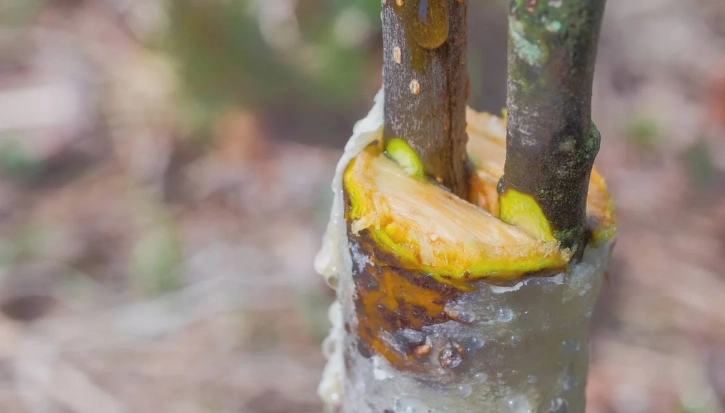
You're not creating Franken-plants. You're building better plants. This guide strips away the mystique and shows you the how and, more importantly, the why.
Quick Navigation: What's Inside?
What Exactly Happens in a Graft Union?
Forget the idea of just taping two sticks together. A successful graft is a biological handshake. When you make a clean cut on both the scion and rootstock, you expose the cambium layer. Think of this as a thin, greenish ring of living cells just under the bark. It's the plant's growth factory.
When you align these cambium layers and hold them tight, something amazing starts. Both plants sense the wound. They produce a mass of undifferentiated cells called callus. This callus tissue proliferates, intertwines, and eventually differentiates into new vascular tissue—new xylem and phloem. These are the pipes that carry water up and sugars down.
If the alignment is good and the plants are compatible, these new pipes connect. Water and nutrients from the robust rootstock start feeding the scion. Sugars from the scion's leaves feed the roots. They become one organism.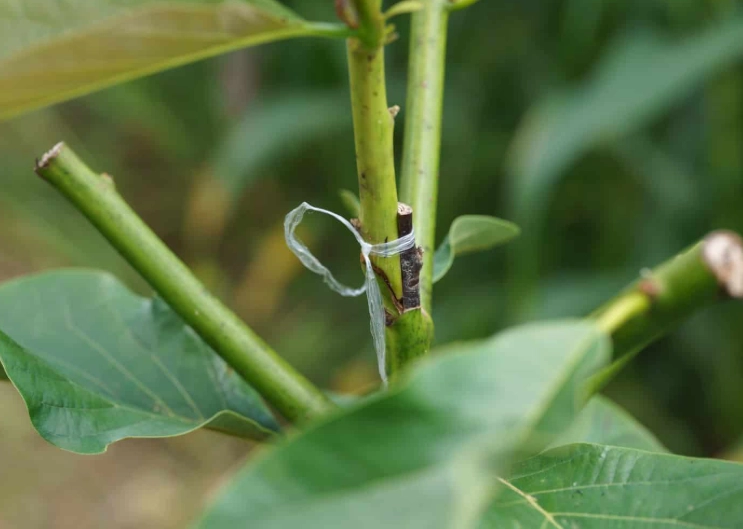
Key Insight: The cambium alignment doesn't need to be perfect 360 degrees. A good match on one side is often enough to get the union started. This takes the pressure off trying to achieve a microscopic perfect circle.
Top Reasons to Start Grafting (Beyond Curiosity)
Okay, so it's cool biology. But what's in it for you and your garden?
Disease Defense: This is the big one, especially for tomatoes, cucumbers, and watermelons. Soil diseases like Fusarium wilt, Verticillium wilt, and nematodes can wipe out a season. Grafted vegetables use rootstock bred specifically for resistance. The fruit you get is still your beloved heirloom variety, but the plant shrugs off diseases that would normally kill it. Research from institutions like the University of California Agriculture and Natural Resources shows significant yield increases in grafted veg in problem soils.
Vigor on Demand: Got poor, sandy, or clay-heavy soil? A vigorous rootstock can power through it, giving your fruiting scion the resources it needs to produce heavily. Conversely, you can use a dwarfing rootstock for fruit trees to keep them small for patios or easy harvesting.
Faster Fruit on Trees: Growing a fruit tree from a seed takes years, even a decade, to fruit. Grafting a scion from a mature, fruiting tree onto a young rootstock can cut that time in half. You're essentially cloning the adult tree.
Repair and Salvage: A tree damaged by lawnmowers, pests, or weather at its base? If the roots are healthy, you can use a technique called bridge grafting to literally bridge the damaged section with scions, restoring the flow of sap and saving the tree.
My own turning point was with tomatoes. After that wilt disaster, I grafted 'Brandywine' scions onto 'Maxifort' rootstock. The difference was night and day. The grafted plants were beasts, producing fruit long after my ungrafted ones had succumbed.
The Essential Toolkit for Grafting Success
You don't need a surgical suite. But the right tools make the difference between a clean heal and a ragged mess.
The Non-Negotiable: A razor-sharp knife. A dull blade crushes cells instead of slicing them. I use a basic, inexpensive grafting knife that I keep honed with a fine-grit stone. A sharp box cutter or hobby knife can work in a pinch for small stems. Sterilize it with rubbing alcohol between cuts.
The Holder: Grafting clips or rubber bands. These hold the union together with consistent, gentle pressure. Silicone clips are reusable and great for tomatoes. For trees, I prefer rubber budding strips—they expand as the union swells.
The Protector (Sometimes): Grafting wax or sealant. This is where many go wrong. The goal is to prevent drying, not smother. For small grafts in a humid environment (like a healing chamber), you can often skip it. For fruit tree grafts outdoors, a thin layer of a flexible sealant helps. I avoid the old-school thick waxes; they can crack and let in moisture.
The Healing Chamber: For vegetable grafts, this is critical. A clear plastic dome or even a large zip-top bag over the pot creates a "high humidity ICU" for the first 5-7 days. It stops the scion from wilting before the vascular connection is made.
One Tool You Don't Need to Buy
Fancy grafting tape. For small jobs, I've had great success with parafilm or even strips of clear plastic wrap. The key is something that holds but eventually degrades or is easy to cut off without damaging the tender new growth.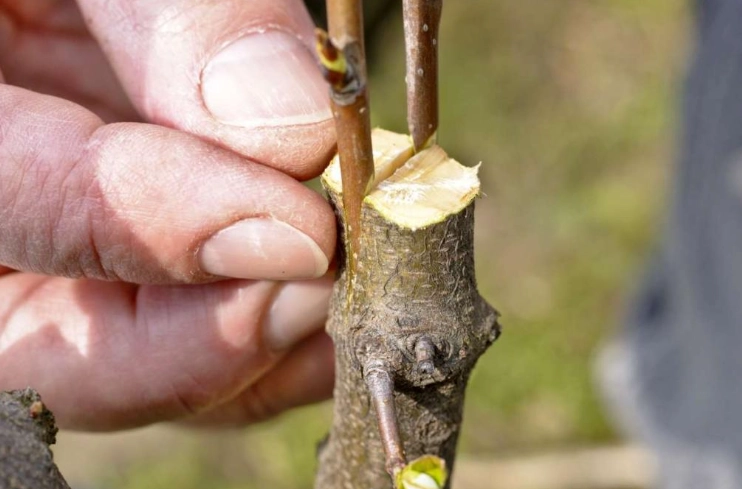
Step-by-Step: The Whip and Tongue Graft
This is the gold standard for joining two stems of similar diameter (pencil-thick is ideal). It creates a huge amount of cambium contact and a mechanically strong joint. Let's walk through it for a fruit tree or a thick-stemmed tomato.
Step 1: The Angled Cut. On both the rootstock and scion, make a long, smooth, sloping cut about 1 to 1.5 inches long. One confident stroke. This is the "whip."
Step 2: The Tongue. Here's the trick. About a third of the way down the slope on both pieces, make a second, shorter downward cut into the wood. Don't cut all the way through. This creates a thin, interlocking "tongue."
Step 3: The Marriage. Slide the two pieces together so the tongues interlock. This is where you see the magic—the alignment forces the cambium layers into contact. It should feel snug, like a puzzle piece.
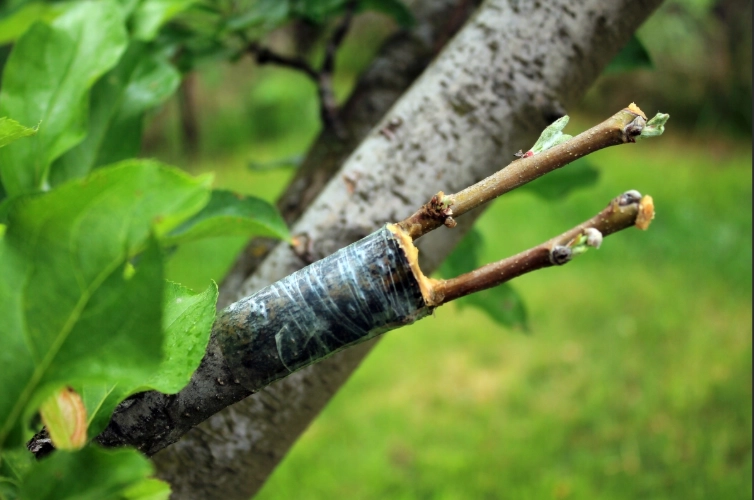
Step 4: Secure It. Wrap the union with a rubber band or clip. If outdoors, apply a thin sealant over the cut surfaces only.
Step 5: The ICU. For vegetables, bag it. For trees, label it and wait. In a few weeks, you should see buds swelling on the scion. That's your first sign of success.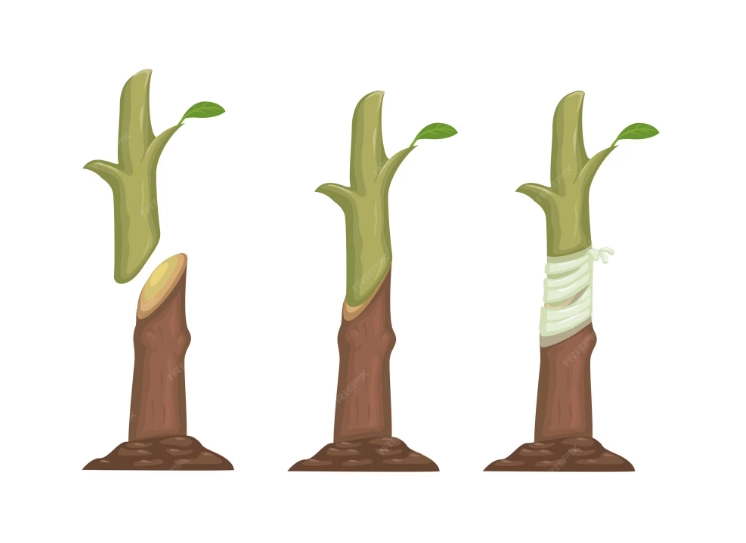
Four Grafting Methods for Different Jobs
Not every plant needs a whip and tongue. Here's a quick guide to picking the right tool for the job.
| Method | Best For | Difficulty | Key Tip |
|---|---|---|---|
| Cleft Graft | Re-topping an older tree with a new variety. The rootstock is much thicker than the scion. | Medium | Use a sharp chisel to make the cleft. Wedge it open, insert two scions (shaped like wedges) at the edges, remove wedge, let it clamp. Seal well. |
| Bud Grafting (T-budding) | Mass propagation in nurseries. Adding a single bud to a rootstock. Very efficient. | High (precision) | Done in late summer when bark "slips" easily. The bud is inserted under a T-shaped flap in the rootstock bark. Less shock to the plant. |
| Approach Graft (Inarching) | Hard-to-graft plants or saving a damaged tree. Both plants remain on their own roots initially. | Low | You grow the two plants pots side-by-side. Make matching cuts on their stems, bind them together. Once united, you sever the scion's roots and the rootstock's top. It's slow but very reliable. |
| Tube Grafting | Fast, commercial vegetable grafting (tomatoes, eggplants). Uses silicone tubes as clips. | Low-Medium | Make a single, straight diagonal cut on both scion and rootstock. Slide them into the tube. Speed and humidity are crucial here. Perfect for home gardeners doing lots of tomatoes. |
I start most beginners with tube grafting for tomatoes or a simple whip graft on willow stems (they root and callus incredibly easily, giving instant gratification).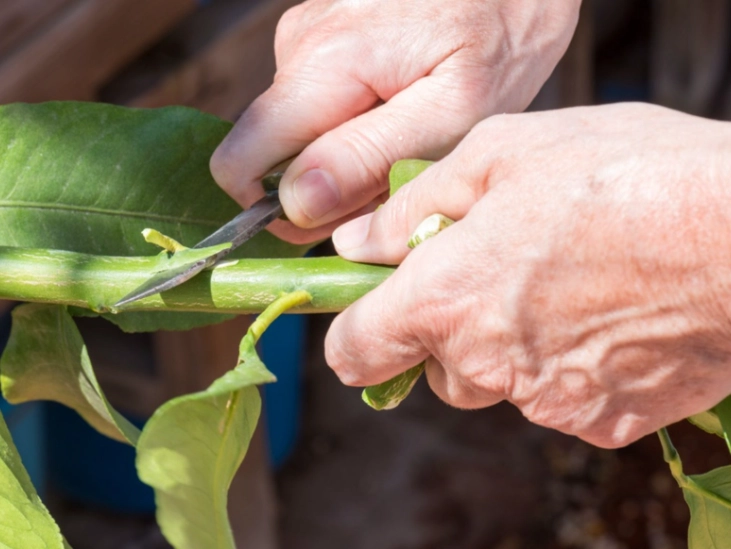
Your Grafting Questions, Answered
Can I graft a tomato onto a potato plant?
The "Ketchup and Fries" plant. It's a fun thought experiment. Technically, they're in the same family (Solanaceae), so it's possible in a lab setting. For the home gardener, it's a bad idea. The growth habits and lifespans are too different. The tomato is an annual focused on fruiting above ground. The potato is a perennial focused on making tubers underground. You'd likely get a weak, confused plant that dies quickly or produces nothing of value. Stick to grafting tomatoes onto tomato rootstocks (like 'Maxifort' or 'Estamino') or even onto eggplant rootstock for soil disease resistance.
What's the biggest mistake beginners make with grafting fruit trees?
Over-wrapping the graft union. The urge is to seal it up tight with grafting tape or wax, fearing it will dry out. But if you don't leave a little room for the callus to bulge out, or if you wrap so tightly you constrict it, you'll encourage rot or prevent the union from swelling and strengthening properly. The wrap should be snug but not strangling. For rubber bands, I stretch them to about 50% more than their resting length. And you must remember to cut or loosen the binding once the union is well-healed (usually in a few months) to prevent girdling.
How long after grafting a citrus tree before I see fruit?
Manage your expectations. Even if you graft a mature, fruiting scion from your neighbor's amazing Meyer lemon onto a rootstock, the tree needs energy to heal the union and establish robust vascular flow. You might see a flower or two in the first year, but it's wise to pinch them off. Let the tree focus on vegetative growth and strengthening that graft. Real, reliable fruit production usually kicks in by the second or third growing season after grafting. The wait is worth it for a stronger, more productive tree that's exactly the variety you want.
 The bottom line? Grafting is a skill, not a magic trick. It fails sometimes. I've had grafts that looked perfect but never took. But when it works, it feels like a superpower. You're not just growing plants; you're designing them to thrive in your specific garden's challenges. Start with a few tomato seedlings this season. Make the cuts, put them in a bag, and watch. That first new leaf that pushes out from a grafted scion? That's a success you built yourself.