
Choosing the best food for puppies isn't about grabbing the bag with the cutest golden retriever on it. I did that once—my first foster, a 9-week-old terrier mix, ended up with loose stools for six days. That was the last time I picked food by packaging. Since then I've read every AAFCO statement I could find, cross-checked recall databases, and grilled two small-animal nutritionists until they politely asked me to leave. Here's the framework I actually use.
My Quick Walk-Through
- What makes the best food for puppies (label truths)
- How to read a puppy food label in 60 seconds
- My top picks by life stage and budget
- Wet vs. dry vs. fresh—what actually matters
- The feeding schedule that prevents 90% of puppy stomach issues
- Puppy food allergies: the sign most owners miss
- Straight answers to real owner questions
What Makes the Best Food for Puppies (Label Truths)
Puppy food legally has to meet a nutrient profile set by AAFCO—either by formulation or feeding trials. Formulation means the recipe meets lab numbers on paper. Feeding trials are real dogs eating it for months. Both work. Trials cost more. If a brand brags about trials, ask which specific product passed. Big brands often put one flagship through trials and leave the rest on formulation.
The single most useful line on any bag: “Formulated to meet the nutritional levels established by the AAFCO Dog Food Nutrient Profiles for growth, including growth of large-size dogs (70 lbs or more as an adult).” That last clause matters. Large-breed puppies need controlled calcium and phosphorus ratios. I've seen retriever owners buy small-breed puppy kibble because it was on sale, and that's a growth-joint disaster waiting to happen.
One non-obvious thing vets rarely mention: puppy food doesn't need to say “puppy” to be legally correct for puppies. Foods labeled “for all life stages” are complete for growth. They're often cheaper than fancy puppy-labeled lines and nearly identical. I've fed all-life-stages kibble to four foster litters with zero difference in weight gain.
How to Read a Puppy Food Label in 60 Seconds
Flip the bag. Look for the AAFCO nutritional adequacy statement. No statement? Put it back. Then scan the first five ingredients—that's where protein and fat sources live. “Chicken,” “chicken meal,” and “chicken by-product meal” are different. Meal is concentrated protein. By-product can include organ meats, which are nutrient-dense, but quality varies wildly by supplier.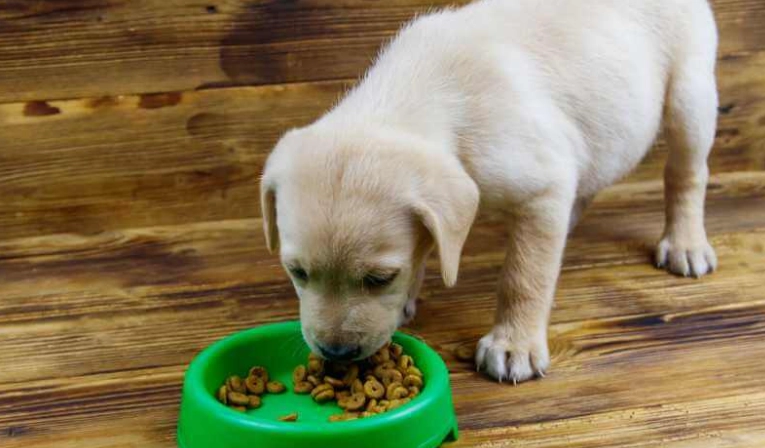
Ignore the guaranteed analysis at first. Crude protein 28% tells you nothing about digestibility. My rule: if the brand won't publish a digestibility or feeding-trial summary, assume the formulation approach and price it accordingly.
My Top Picks by Life Stage and Budget
| Scenario | What I suggest looking for | Why this works | Watch out for |
|---|---|---|---|
| Toy breed, 8–12 weeks | Small kibble, high calorie density (≥4,000 kcal/kg) | Tiny stomachs fill fast; low-calorie food means constant hunger | Hypoglycemia in the first two weeks—keep honey-water gel on hand |
| Large breed, 3–8 months | Calcium 1.2–1.8% on dry matter, AAFCO growth/large-size statement | Controlled mineral ratios protect developing joints | Free-feeding—big puppies overeat and grow too fast |
| Budget tightness | All-life-stages kibble from a brand with a named plant and 1-800 number | Legally complete for puppies at a lower cost per pound | Very cheap foods sometimes use unidentified meat meals |
| Picky eater after vaccination | Wet puppy food warmed to body temperature | Smell drives appetite; hydration helps with mild vaccine lethargy | Switching cold-turkey causes diarrhea—mix 25/75 for three days |
A brand I keep coming back to for fosters: Purina Pro Plan Puppy (chicken and rice). Not glamorous. But their feeding-trial documentation is public and the recall history is clean relative to volume. That's my benchmark, not a paid recommendation.
Wet vs. Dry vs. Fresh—What Actually Matters
Dry kibble scrapes teeth, costs less, and is easy to portion. Wet food boosts water intake—useful if your puppy ignores the bowl after play. Fresh/refrigerated food has better palatability, but the cost per calorie is 3–4x kibble, and the “human-grade” label means nothing legally in the U.S. except the company paid for a certification.
My honest take: a dry base plus a spoon of wet food mixed in gets the best of both. I do this for the first week after adoption because stress reduces appetite, and warm wet food triggers interest faster than dry kibble.
One mistake I see constantly: owners free-feed dry kibble all day and then wonder why the puppy ignores training treats. Hunger drives food motivation. Scheduled meals fix that in three days.
The Feeding Schedule That Prevents 90% of Puppy Stomach Issues
- 8–12 weeks: four small meals daily, roughly every 4 hours. Last meal at 7 p.m.
- 3–4 months: three meals daily. Drop the midday meal gradually over a week, not overnight.
- 5–6 months: two meals. This is when most diarrhea cases from “too much food at once” calm down.
Measure with a kitchen scale for the first month. Cup scoops vary by 30% depending on how you pack them. A level cup of one kibble can weigh 85g and another 120g. That's a 40% calorie difference—enough to cause loose stool or rapid weight gain.
Water: unlimited during the day, pull the bowl 90 minutes before crate time for puppies under 4 months. It cuts 2 a.m. whining dramatically.
Puppy Food Allergies: The Sign Most Owners Miss
True food allergies in puppies under 6 months are rare. What's common: adverse reactions to a specific protein or a sudden diet change. The sign I watch for isn't vomiting—it's paw licking after meals combined with intermittent soft stool. Owners blame grass or laundry detergent. Nine times out of ten, it's the food.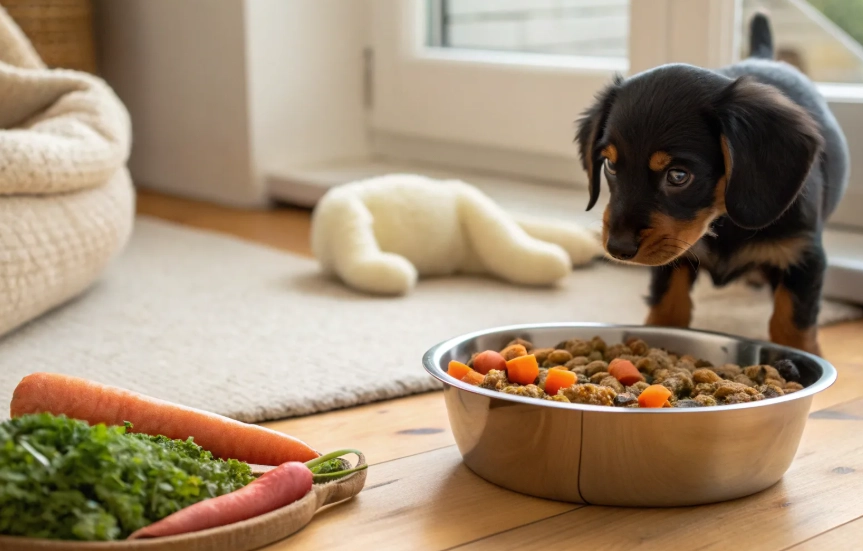
Elimination protocol I use: switch to a single novel protein (duck or salmon) for 8 weeks, no treats, no table scraps. If itching stops, reintroduce the old food. Symptoms return within 72 hours? You've found the trigger. This isn't a vet diagnosis—it's a home triage that saves a $200 allergy panel.
Grain-free is not a solution here. The FDA investigated a link between grain-free diets and dilated cardiomyopathy in dogs. I avoid grain-free puppy food unless a vet specifically prescribes it for a diagnosed issue.
Straight Answers to Real Owner Questions
My 10-week-old refuses breakfast but eats dinner fine. Is the food wrong?
How do I transition to adult food without causing diarrhea?
Are puppy dental chews safe with kibble?
What's the most common feeding mistake you see?
Fact-checked against AAFCO 2023 nutrient profiles and FDA CVM grain-free investigation summaries. Brand names reflect personal foster experience, not sponsorship.


Comments